Traveling To South Korea During Chuseok? Here Are The Best Tips!
As in any country, there are public holidays when I wouldn’t recommend traveling, since you might not be able to find a train, accommodation prices will double, and you’ll be surrounded by endless crowds. But it can also be fun and a great way to learn more about a culture provided that you plan ahead, of course!
There are two major holidays widely celebrated in South Korea: Seollal and Chuseok.
Let’s talk about Chuseok and how you can survive one of the busiest holiday periods if you’re traveling in South Korea during this time.
Save it for later!
What is Chuseok?
Simply put, it can be referred as the harvest festival, and is celebrated on the 15th day of the 8th lunar month (usually around September-October), when the moon is as its fullest. Chuseok, also known as Hangawi, is actually one of the most important holidays in the country.
However, unlike many holidays with fixed date, the timing of Chuseok changes every year.
But this holiday is much more than just a harvest festival: often compared to “Thanksgiving” because of the family reunions around a feast of traditional dishes, it’s also an occasion to honor one’s ancestors.
The celebrations usually lasts three days: the day before, Chuseok itself, and the day after, which can sometimes result in a 5-day holiday, depending on which day Chuseok falls on.
Keep in mind that a lot of places are actually closed on the day of Chuseok itself!
Traditional Chuseok customs
From games to food, the harvest festival is filled with lively festivities and commemorations. Here are some of the best-known traditions people used to practice or still enjoy today.
Games
Yutnori
A board game in which players take turns tossing four yuts into the air and moving their piece according to the result (do, gae, geol, yut, back do, and mo), with the goal to get around the board and returning to the starting point.
Of course, your opponents can pursue you, capture your pieces (usually 4), and force you to start over until one of the team brings all four of its pieces back to the starting point.
Jegichagi
Remember when you used to try to beat your friends by seeing who could bounce a ball the most times? Well, the principle is basically the same, with the slight difference that the “ball” is much smaller.
Using a jegi, which looks like a shuttlecock made of a sheet of paper folded several times and wrapped around a few coins is a fun game where you have to keep the jegi in the air for as long as possible.
Note: you’ve probably seen this game if you’ve watched Squid Game!
Tuho
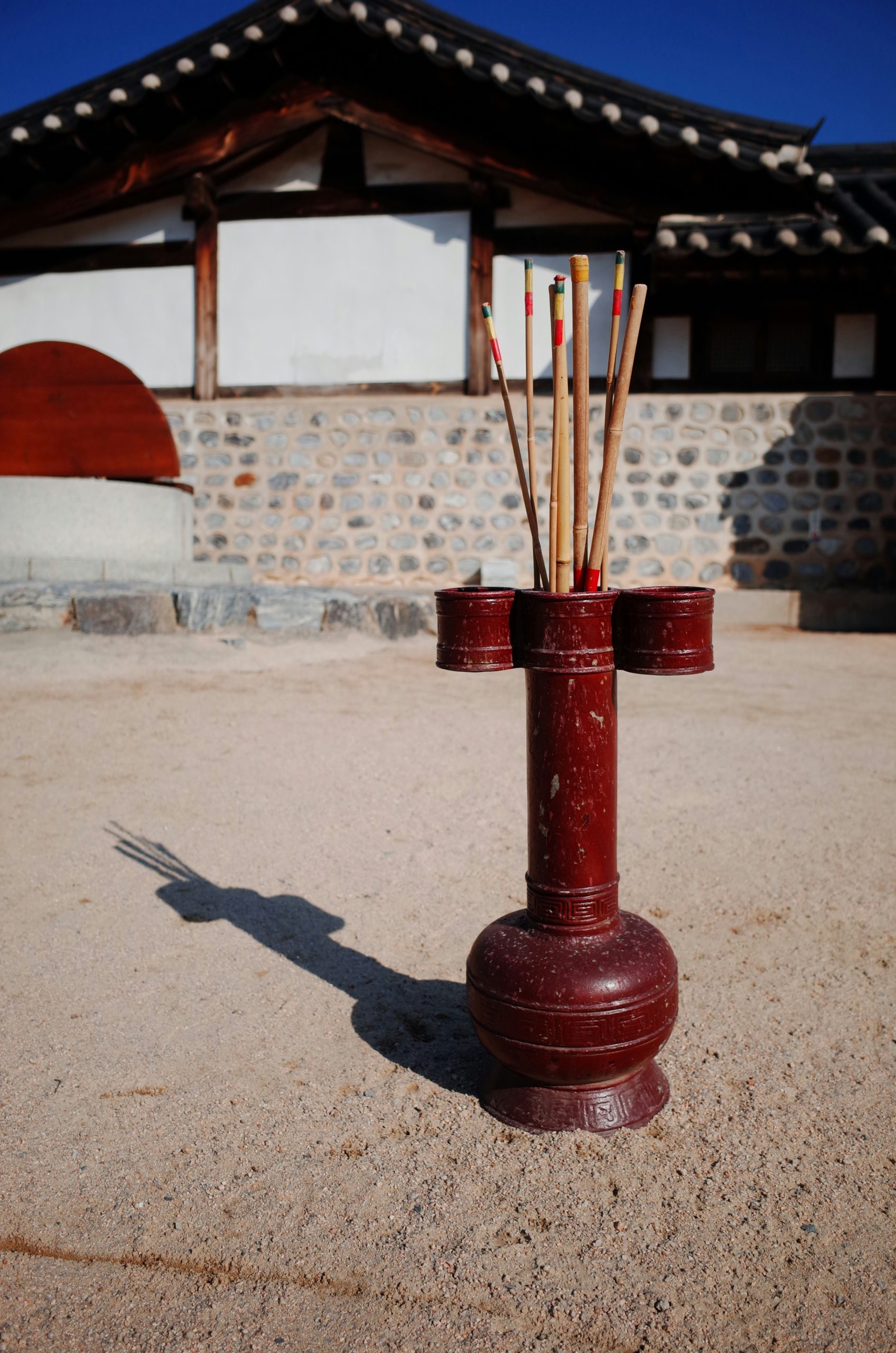
A game of skill where you throw blue and red arrows into a pot; the winner is the one who succeeds to get the most arrows in.
This game was very popular during the Joseon period, especially in the royal palaces, which made it a game generally played by people of a certain rank. Of course, these days, everyone is welcome to play and show off their skills.
Ganggangsullae
A traditional circle dance, performed by a group of women in the moonlight, to pray for a bountiful harvest, is now listed as part of UNESCO Intangible Cultural Heritage. It’s a cultural symbol that can even be experienced during festivals throughout South Korea.
Its origins are obscure, as no one really knows when this dance started, but some say it was created by Admiral Yi Sun-sin in the 16th century, as a military tactic to scare and surprise Japanese naval forces by making them believe he had a big enough army.
Ssireum
Or what you might call Korean wrestling! Using a satpa, a strap tied to the waist and leg of the wrestler, the goal is to pin your opponent to the ground.
Dishes
Songpyeon
Small, half-moon shaped rice cakes, typically made and eaten during Chuseok.
Hangwa
Traditional Korean sweets.
Fruits
You can usually find all kinds of seasonal fruit: persimmons, apples, pears…
Sanjeok
Meat or vegetable skewer.
Fried fish
Specifically, jogi or yellow croaker.
Jeon
Delicious savory pancakes that you can decline in a variety of flavors: kimchi, potato, meat, or simply vegetables.
Of course, there are many other dishes, and every family and region has its own traditions and festive food.
Giving gifts
Since Chuseok is a time for reunions and celebration, it’s common to show your appreciation to family, friends, and employees by offering them gifts.
Gifts range from premium options such as Hanwoo (Korean beef) sets, fruit sets, supplement sets, to gift certificates or cash.
Paying homage
As I said before, another important aspect of Chuseok is honoring one’s ancestors. Performing charye, a memorial service to honor and thank the ancestors, while preparing offerings (such as the traditional dishes mentioned earlier) arranged in a specific way on a beautiful table, is one of the customary traditions.
Visiting family graves is also another important part of this holiday.
Activities you can do during Chuseok
Whether you want to avoid the crowds or enjoy free activities, here are a few ideas for you!
Visit a museum
We already know that most museums in South Korea are free, so if you’re a history buff but never have the time or opportunity to visit a museum, Chuseok seems like the right time.
All of them will be free during this holiday, though they may be closed on Chuseok itself. But if you want to do something cultural without breaking the bank, this is probably the best option.
Plus, museums often offer traditional performances and other cultural programs.
Pro tip: check out the National Museum of Korea and The National Folk Museum of Korea if you’re in Seoul!
Step back in time at the royal palaces
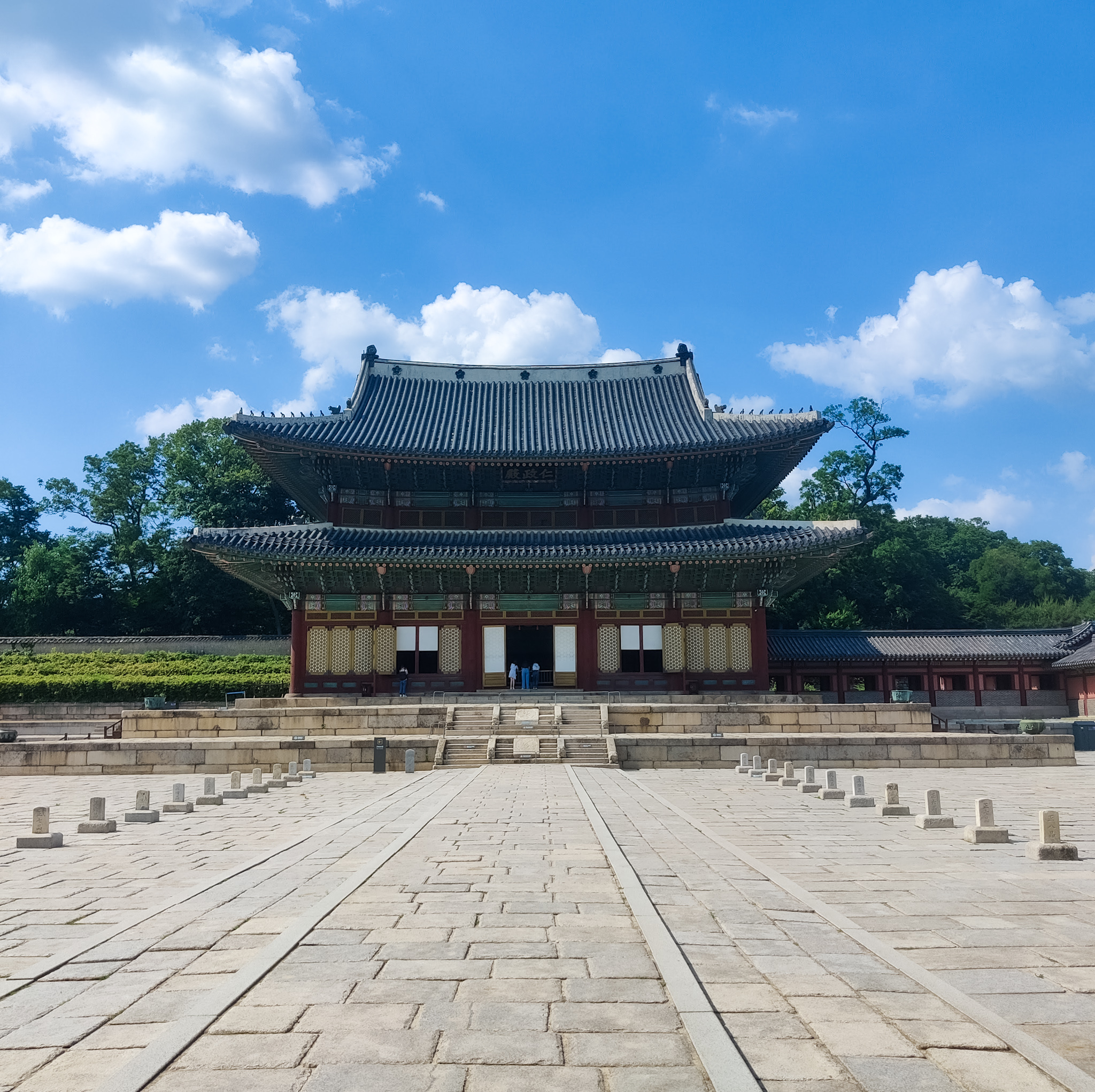
What could be more traditional and cultural than a visit to a royal palace where you’ll be able to admire the colorful dancheong, the beautifully carved wooden buildings, and artifacts from another time?
Although some are usually not free, during Chuseok, you don’t need to wear a hanbok (even though it’s always a great experience) to enter without a ticket, as they’ll all be completely free for you to enjoy.
Note: this is a very popular activity in Seoul during Chuseok, so expect crowds.
Attend the Seoul Autumn Festa
Celebrate autumn with this festival lasting over 2 months, featuring a wide range of performing arts all around the city of Seoul!
For more information, visit the official website here!
Unwind at the Seoul Outdoor Library
Do you love reading in a park or simply relaxing and recharging your batteries outdoors? Check out the Seoul Outdoor Library, where you can read a selection of books for free on the grass, comforably seated on a colorful bean bag chair.
Spend some time in nature
If you plan to indulge and try all the traditional delicacies, you might need to loosen your belt a few notches, or you could go for a hike.
It’s also a great way to avoid the crowds of the capital and enjoy the fresh air in the great outdoors. There are plenty of hikes to choose from in Seoul, and if intense exercise isn’t really your thing, you can always enjoy a relaxing picnic in one of the city’s beautiful parks.
↪ See also: 5 hikes in Seoul and 7 parks to relax in the busy capital!
Take a day trip or spend Chuseok in a small town
If you’re not a big fan of being surrounded by a lot of people, you might prefer to avoid spending Chuseok in Seoul and head to the countryside to enjoy more peaceful activities such as cooking, watching TV, sleeping, or walking around the village.
And if you’d like to spend a tranquil Chuseok by the sea, you can always opt for Jeju Island.
Tips and Tricks for a stress-free Chuseok
1. Book everything in advance
And I mean everything! I know that normally, outside of holidays, you can easily find seats on intercity buses, trains, or planes a few days in advance (or even on the same day) but Chuseok and public holidays in general are different.
Everything will be fully booked well in advance, so be prepared and book your transportation and accommodation ahead of time, a few months in advance if you can.
2. Avoid traveling during Chuseok
If possible, avoid at all costs taking the train, car, or intercity bus during Chuseok or even the day before. If you’re traveling, try to stay in one place until Chuseok is over, or travel to your destination at least two days before the celebrations for peace of mind.
3. Walk or ride a bike
Are you staying in one of the most busy cities, like Seoul, during Chuseok? Choose a central location and walk or bike to the places you plan to visit.
Try to avoid the subway or buses, as they’ll be packed during this period.
4. Skip Seoul
I personally spent a Chuseok on Jeju Island, with pretty much nearly deserted beaches to myself, blue skies, and turquoise waters, but above all, peace and quiet.
You can choose any city near the beach or in the countryside if you’re tired of the craziness and the noise.
It really all depends on what you prefer: a lively atmosphere with plenty to see and do, or a relaxing getaway.
Traveling to South Korea during Chuseok is definitely different but also unique as you’ll get to experience the warmth of the people and the festive atmosphere of this traditional holiday.
But you’ll also need to be prepared for one of the busiest times of the year. I hope this article gives you an idea of what to expect during this period and helps you plan your trip accordingly.
Are you already familiar with South Korea, or would you like to learn a little more about the country? Here are the most common misconceptions about it!