
Okayama – Guide To Two Must-See Attractions
Sometimes, the cities you simply pass through or decide to visit on a whim are the ones that leave the biggest impression on you, or at least make you want to return one day. That’s the case with Okayama.
I only visited as part of a day trip, but Okayama took my breath away, mainly thanks to two attractions that deserve a little more appreciation than they’ve received.
Without further ado, here’s a little guide to Koraku-en Garden and Okayama Castle!
This post contains affiliate links. Whenever you buy something through one of these, I get a small commission, without any extra cost to you. Thank you!
Save it for later!
Okayama in a few words
If you’ve never visited the region of Chugoku in Japan, I urge you to reconsider, because in addition to the famous town of Hiroshima, you’ll find other gems there, including Okayama.
And if you’re looking for good reasons to visit Okayama, let me give you a few: first, the prefecture is known as the “Land of the Sun” thanks to its agreeable weather all year round and low rainfall, which makes it ideal for growing delectable fruits whatever the season; secondly, you can enjoy not only beautiful nature, but also hot springs and historic buildings.
And thirdly, if you like traditional culture, you can’t go wrong in Okayama thanks to its various traditional crafts: sword making, pottery…
Not to mention that the city is the birthplace of one of Japan’s most beloved and famous folk heroes: Momotaro!
Still not enough to convince you to visit? Let me introduce you to two unmissable attractions in the city: Koraku-en Garden and Okayama Castle.
Koraku-en Garden
Opening hours: 08:00-17:00 (fall/winter) or 07:30-18:00 (spring/summer) every day
Admission: ¥500
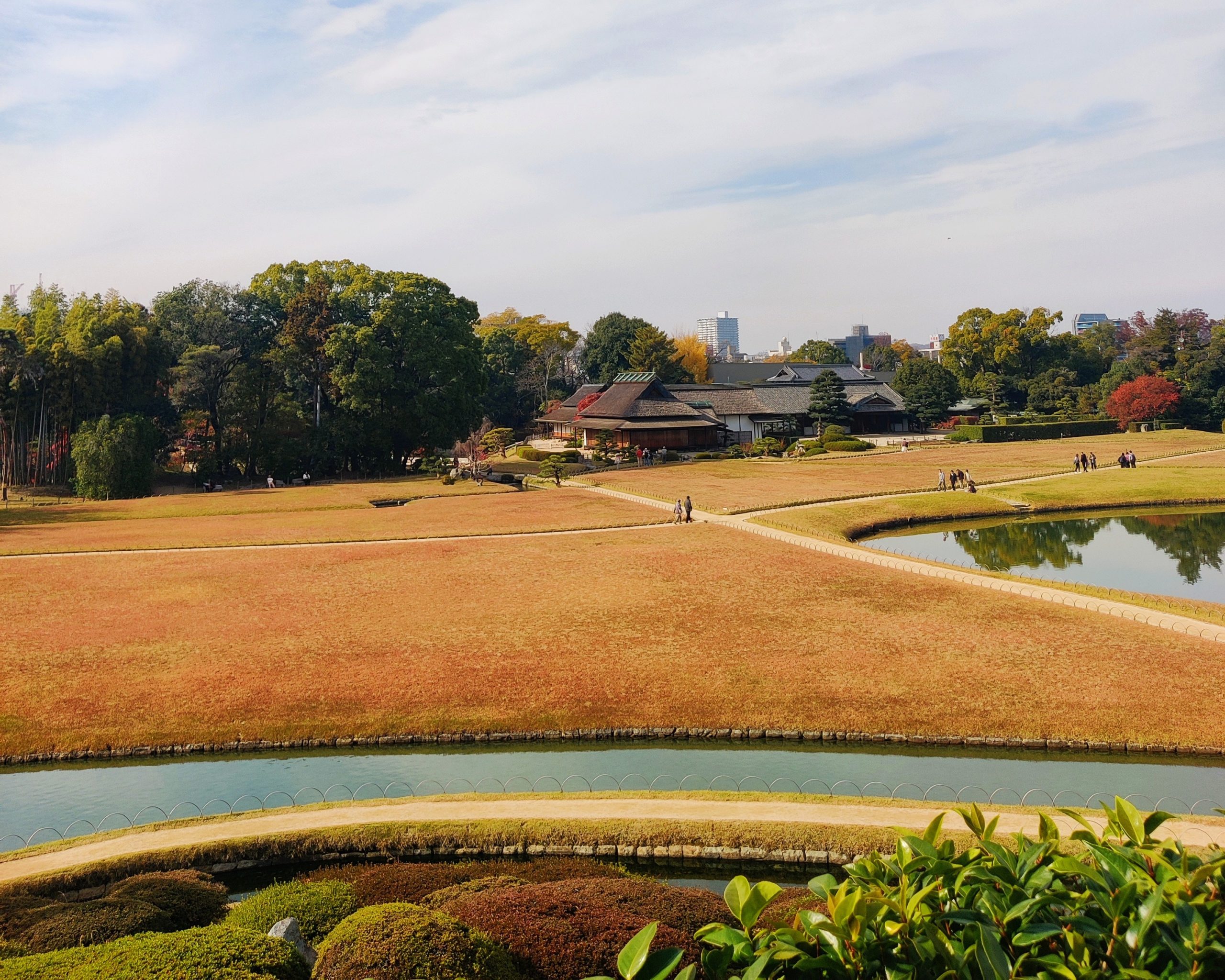
As one of Japan’s Three Great Gardens (Kenroku-en, Koraku-en, and Kairaku-en), it’s no surprise that this is a must-see if you ever travel to Okayama.
Built in the 17th century, it was originally reserved to feudal lords or daimyos, who spent their time there relaxing, entertaining and receiving important guests. It wasn’t until 1884 that the garden was finally opened to the public, to the delight of all, I guess.
In short, Koraku-en is a majestic garden, a national heritage and a peaceful place where you can rest and relax your mind.
Highlights of Koraku-en
For me, the entire garden is a big highlight, but if I really had to choose a few spots as my favorites, here are the ones that come to mind!
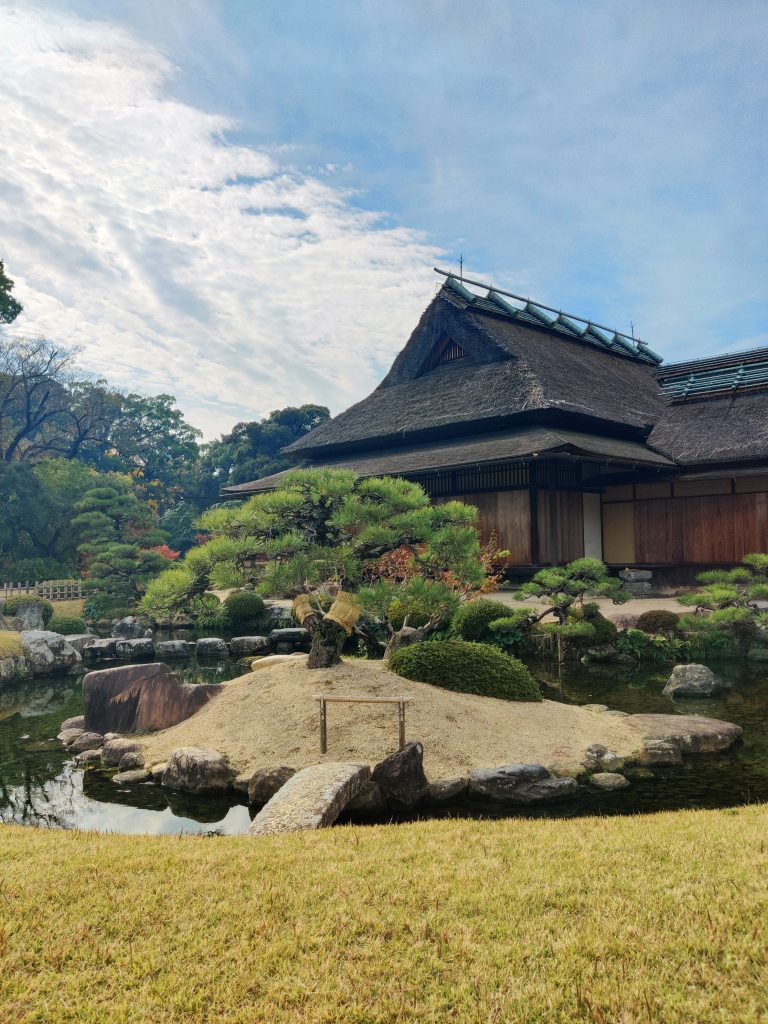
First, there’s En’yō-tei House, which was pretty much the place where the feudal lord resided when he visited Koraku-en. And although it was unfortunately destroyed during WWII, efforts have been made to restore it to its original layout and beauty.
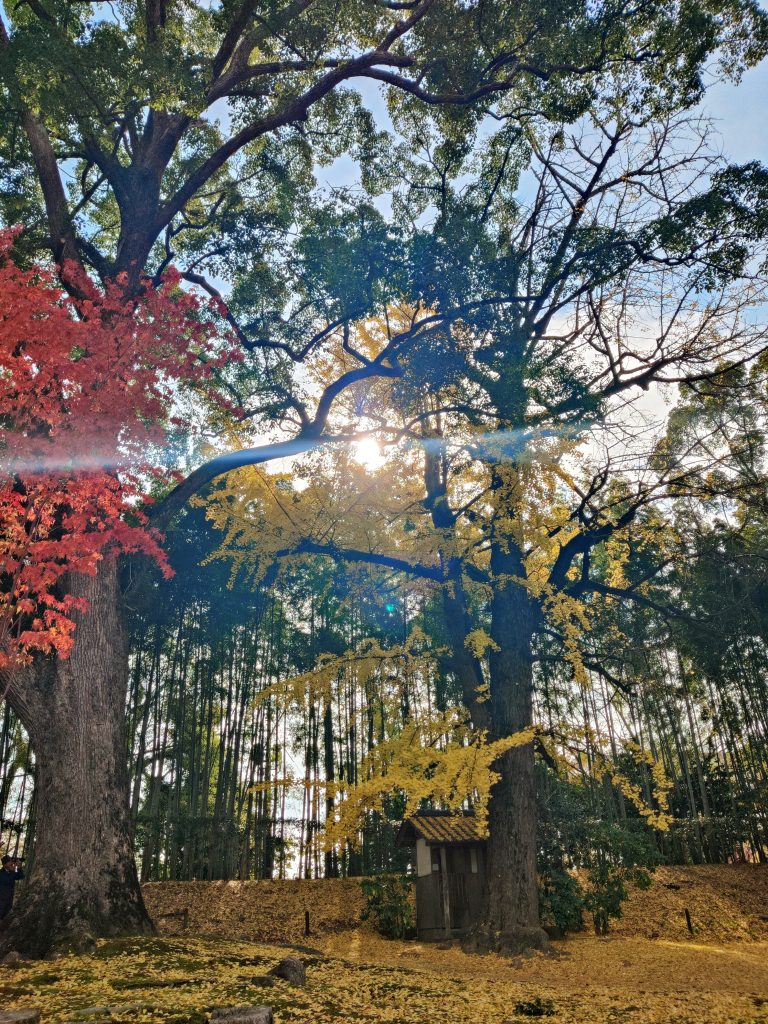
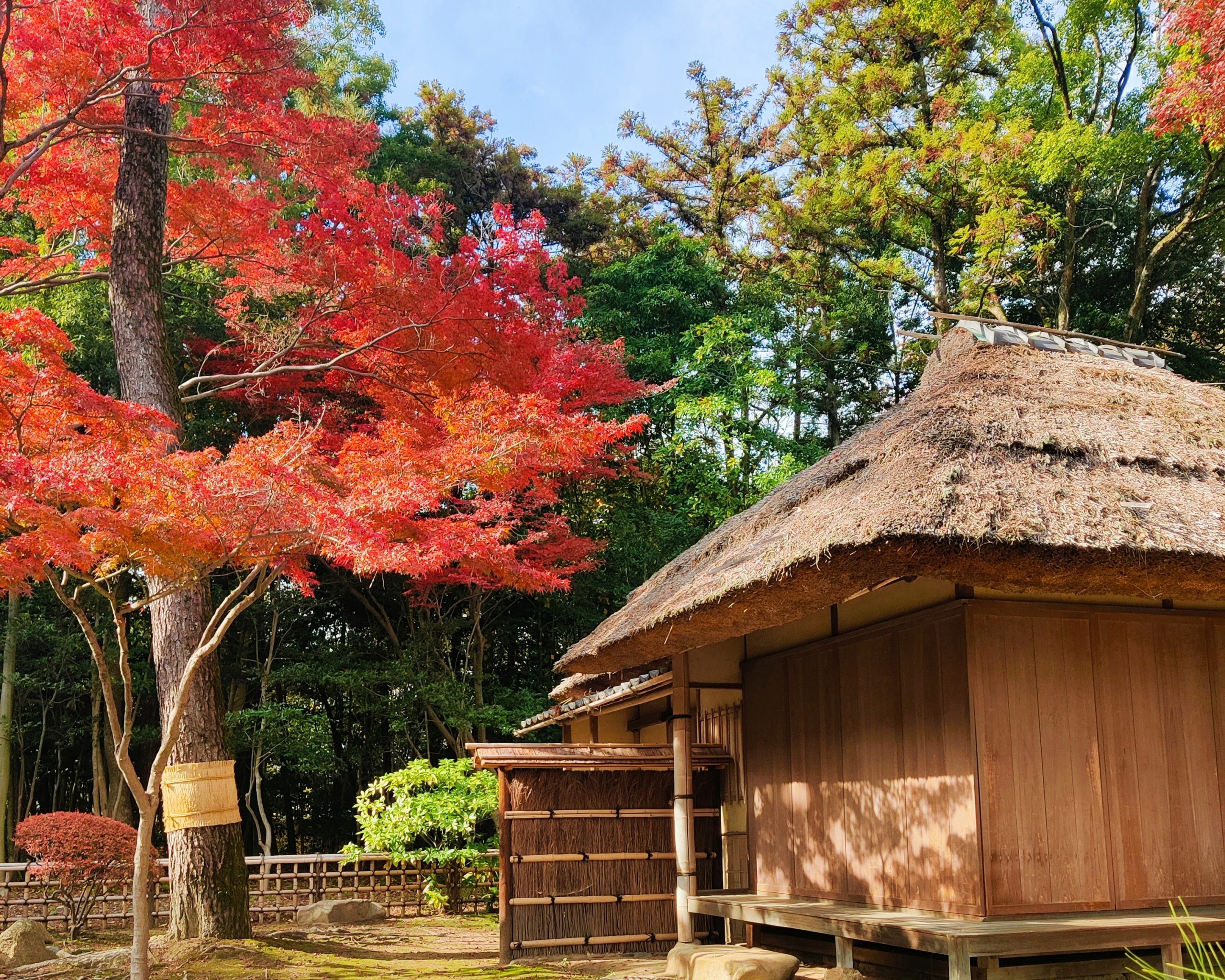
Wandering around the garden, you’ll eventually stumble upon Nishiki-ga-oka Grove, where sunlight filtering through the trees and leaves that change color with the season makes it an oasis of calm and beauty.
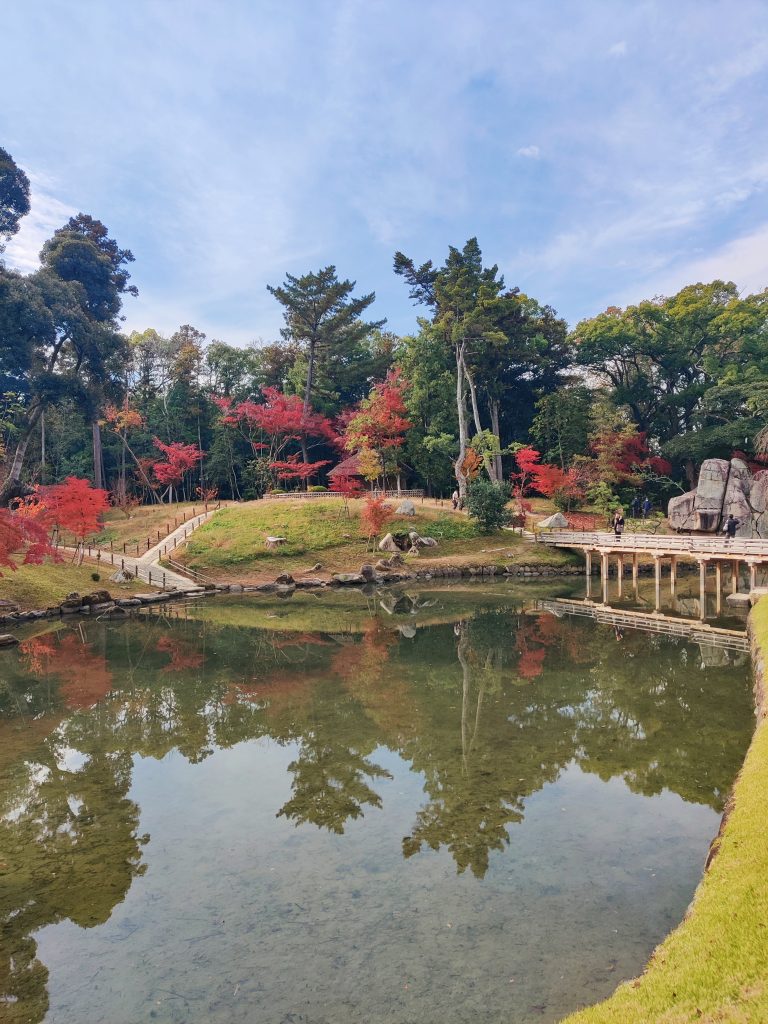
Kayō-no-ike Pond and its small artificial waterfall, which water flows peacefully into the perfectly clear pond where trees and cloud are beautifully reflected, is another scenic spot. Plus, when summer comes, you’ll be greeted by lovely white lotus flowers that make the pond even more special.
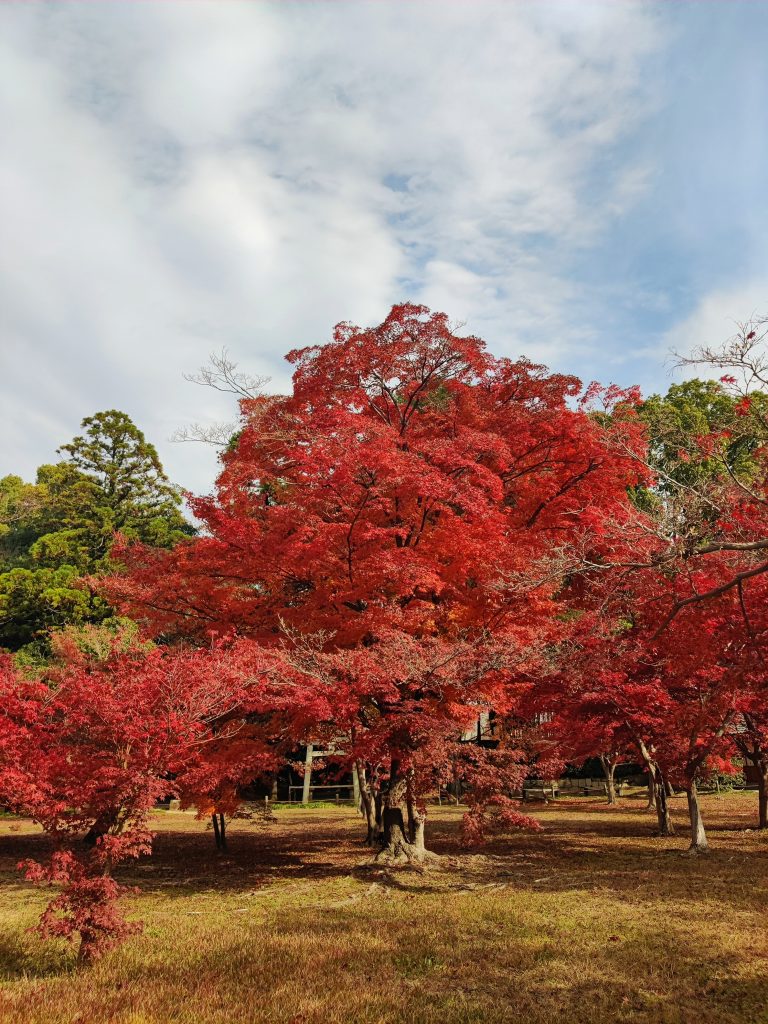
But if you come in spring or fall, don’t worry: Chishio-no-mori Grove and its majestic maple trees will offer you plenty of opportunities for leaf peeping and seasonal photography.
And last but not least, Sawa-no-ike Pond, where breathtaking views of the garden and its iconic spots await you!

Events
Numerous events are held throughout the year at Koraku-en, such as the Tea Picking Festival, the Lotus Viewing Festival, and even two events where the garden is open during the night in August and November, to admire the picturesque sights illuminated by moonlight and thousands of lights.
For more information on the various events, don’t hesitate to check out the official website here!
Okayama Castle
Opening hours: 09:00-17:30 every day
Admission: ¥400
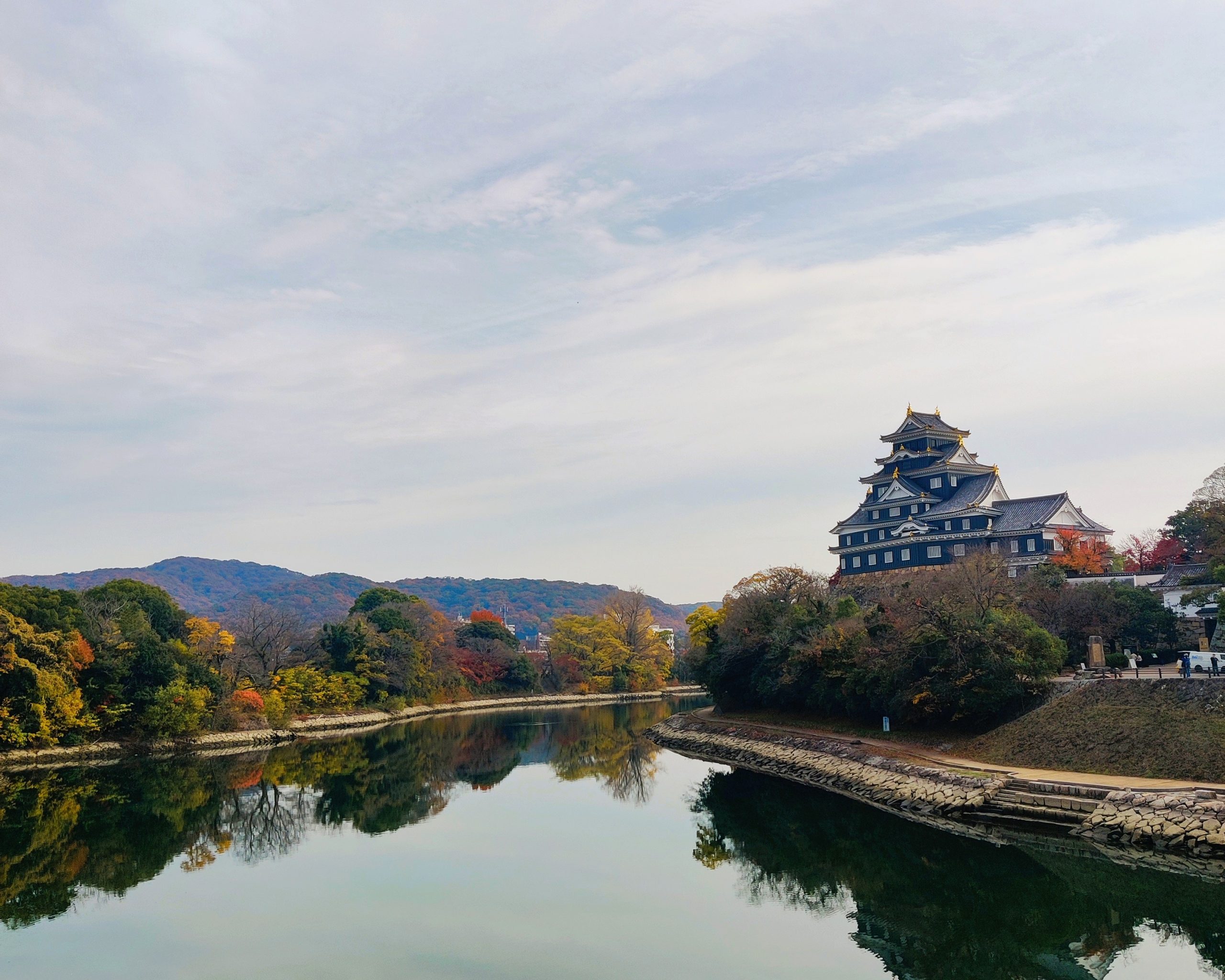
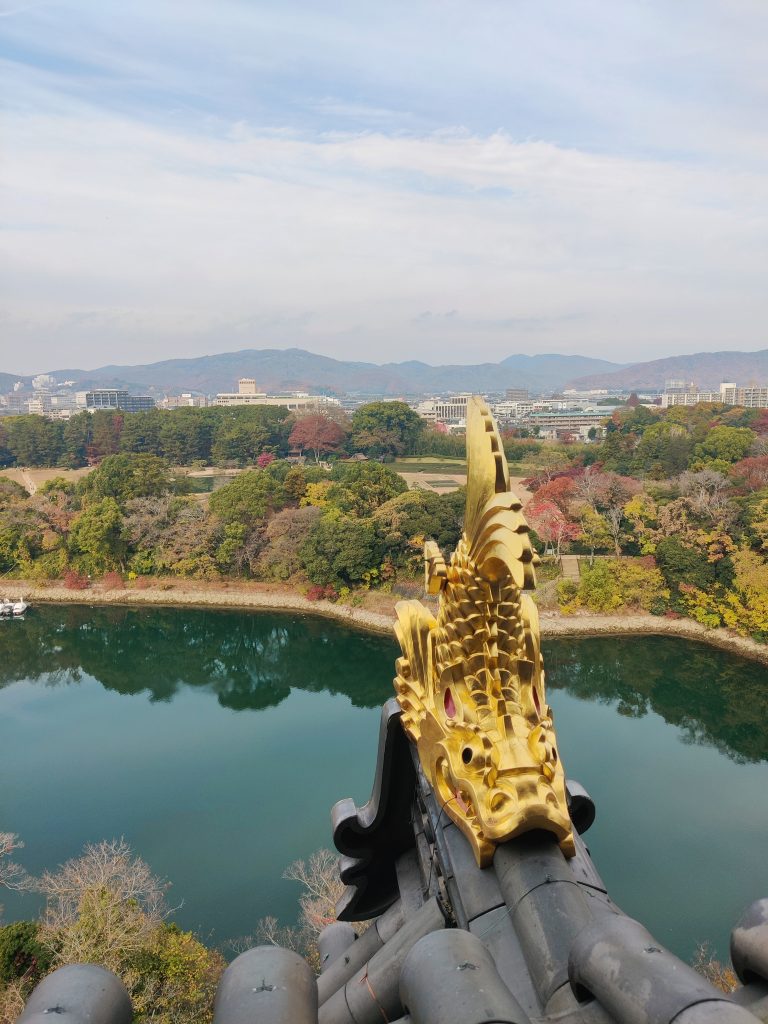
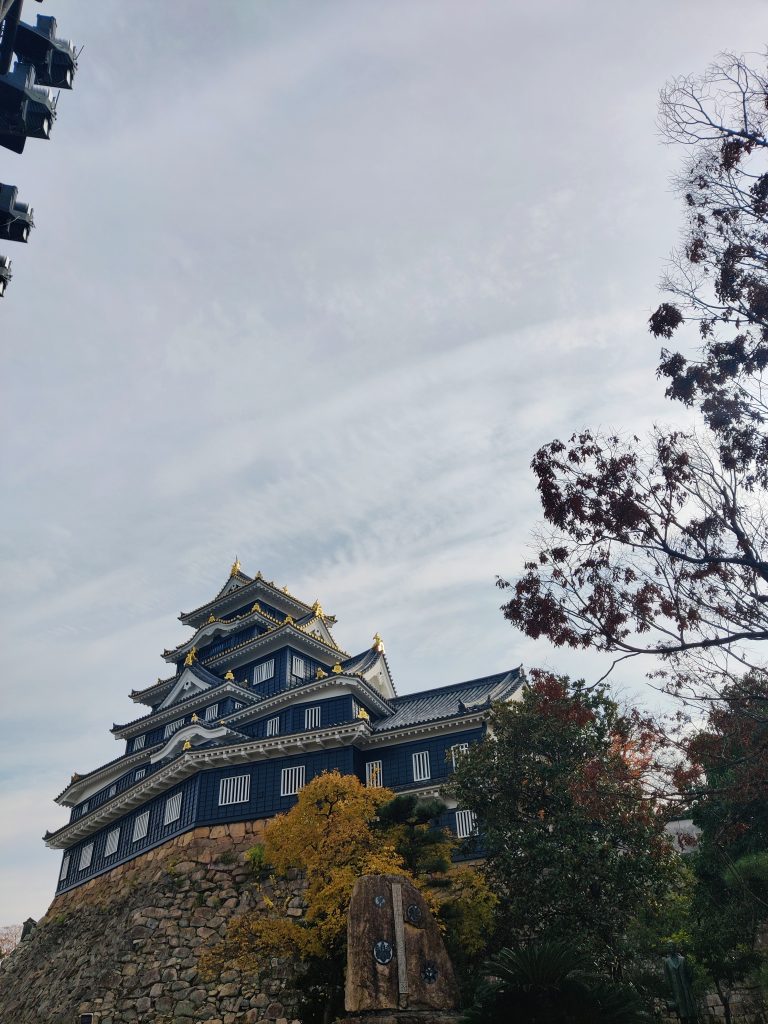
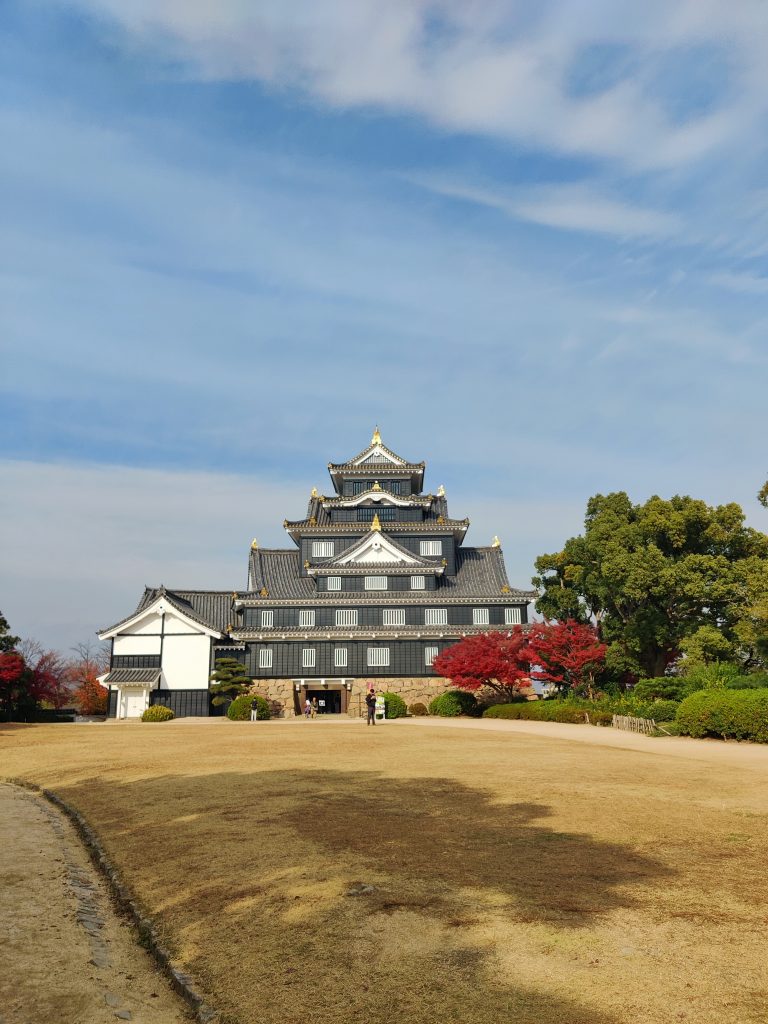
Completed by Ukita Hideie in 1597, Okayama Castle is famous for its black clapboards, which earned it the name of “Ujo” (crow castle), its gilded roof tiles, as well as its pentagonal Tenshu (or castle tower).
Its position on the hill and its location by the Asahi river make it a great viewpoint of the city. But contrary to what one might think, the castle wasn’t actually built for defensive or military purposes, as even a castle town was built to allow merchants and various businesses to prosper.
Mostly destroyed during WWII, it has been rebuilt since 1966, while retaining what makes it unique.
Highlights of Okayama Castle
With its 6 levels, Okayama Castle is the ideal place for anyone who wants to learn more about the castle in general, but also the key figures from the time and the development of the city itself.
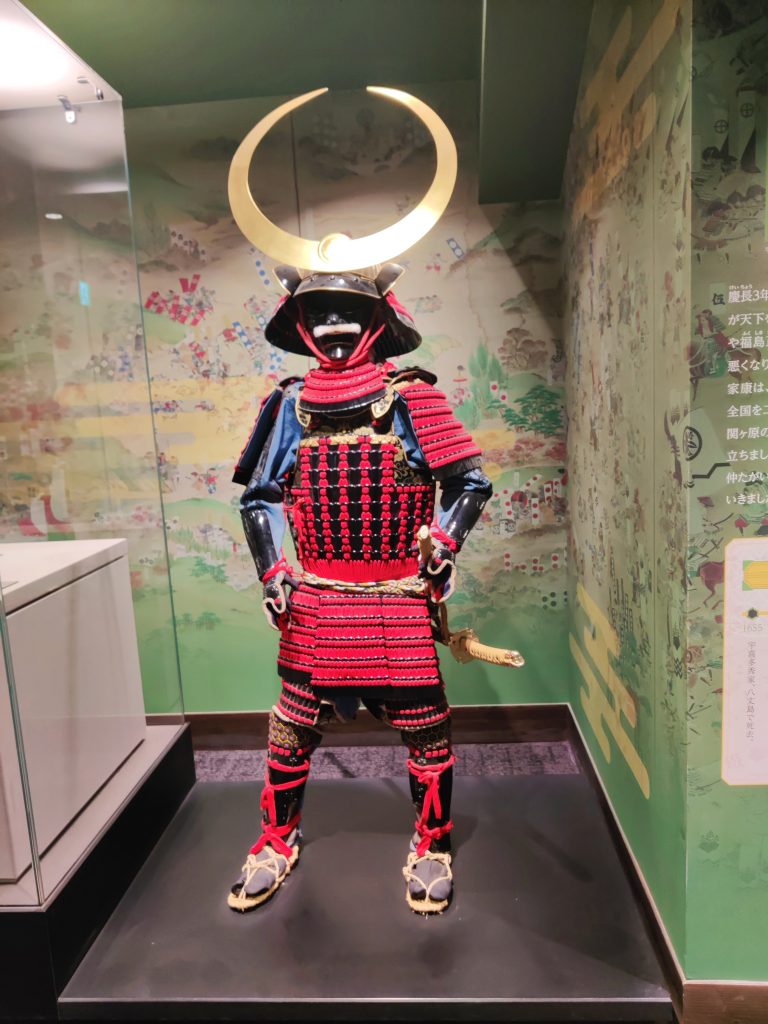
Spend time learning about the Sengoku and Edo periods by climbing into a daimyo palaquin, checking how heavy a Japanese sword actually is, or trying on the clothes worn by lords and their wives at the time.
Find out more about one of the country’s most decisive and famous battles: the Battle of Sekigahara, from the perspective of three important generals from Okayama.
Learn how the fortified town came into being and how the city has evolved over the years, as well as the relationship between the city’s ninjas and the castle.
All this thanks to interesting exhibits, documentaries, and various artifacts from the period.
And to top it all off, don’t worry if you don’t speak Japanese, as a brochure is available in different languages and QR codes spread out around the castle provide explanations in Chinese, English, and Korean.
Events
As for Koraku-en, Okayama Castle hosts a few events during the year: illuminations in summer, the Momotaro Matsuri Festival in autumn, and the Bizen Pottery Festival in October.
How to get to Okayama
The good thing, or should I say the great thing about Okayama, besides its beauty and attractions, is that it’s easily accessible from many cities, giving you no excuse not to go!
Count 39 minutes from Hiroshima, less than hour from Osaka, and an hour from Kyoto by shinkansen (bullet train).
It’s close enough for a day trip even from Onomichi, as I did (another gem to visit in the region, by the way).
Tips for visiting Koraku-en Garden and Okayama Castle
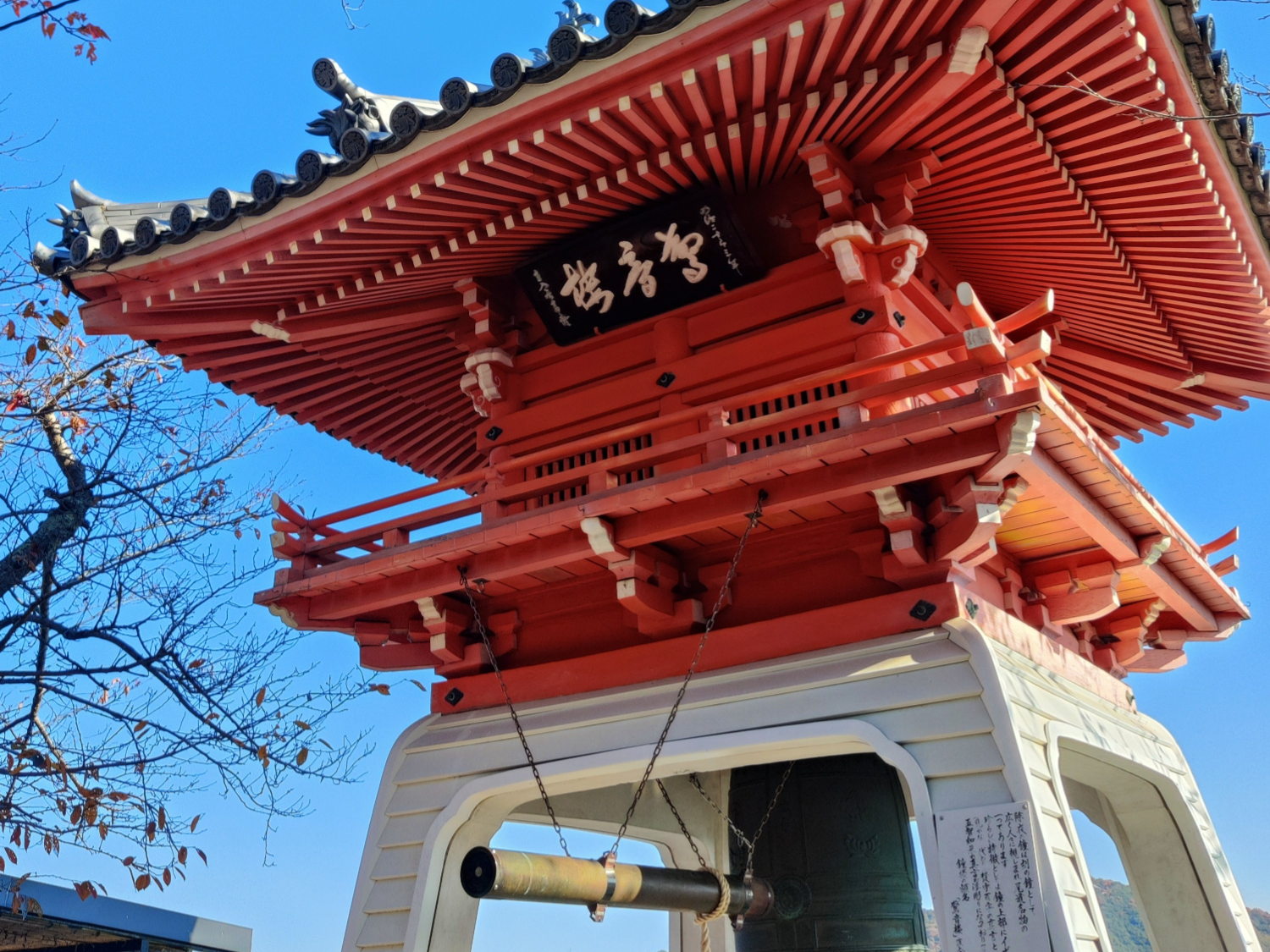
As both attractions are literally separated by a mere bridge, here are a few tips to consider when visiting.
1. Combined tickets
If you plan to visit both, it’s best to buy a combined ticket: ¥720 valid for the garden and castle, saving you ¥180 that you can spend on other attractions or snacks.
2. Respect the “no photography” signs
I’m thinking mainly of Okayama Castle, where photography is prohibited in certain areas.
3. Re-entry
One little thing to know is that once you leave the garden to visit the castle, you can’t re-enter the grounds with your combined ticket.
FAQ
Are there any stamps available at Koraku-en and Okayama Castle?
Yes, both are available near the entrance to the sites.
Are there any special experiences around Okayama Castle?
Besides trying on the clothes from that period, there’s also the Bizen-yaki Studio where you can try your hand at Bizen ware, a specialty of Okayama.
The experience lasts one hour and costs ¥1250. You’ll leave with a unique souvenir from Okayama and your trip to Japan.
What if I come by car?
There’s no dedicated parking lot at Okayama Castle, but you can park at Koraku-en Garden or use a coin-operated parking lot in the city.
Are pets allowed inside these two main attractions?
Pets aren’t allowed, except for service dogs.
Is the castle illuminated at night?
Yes, the illuminations usually start at sunset and last until midnight.
What do you think? Are Koraku-en Garden and Okayama Castle now on your list of places to visit on your next trip to Japan?
Want to visit one of Japan’s most popular attractions in a different way, and without the crowds? Check out my article on Fushimi Inari Taisha!


Woah! Another not so well-known place in Japan! Would add to my Japan itinerary someday!
Yess, I’m so happy to hear that, and can’t wait for you to visit the beautiful Okayama! Thank you for reading, Blaze, and safe travels!
How cool are these places! So awesome 🥰
Thank you, Ash, and I hope you’ll see them in person one day!