Getting Around Busan – Public Transportation In Busan
Is this your first time traveling to Busan? Are you worried you’ll get complety lost because of the language barrier and the extensive public transportation network? Don’t worry, here’s a comprehensive guide to getting around Busan, along with everything you need to know before your trip.
I’ve also listed other ways to explore the city if you’d like to take a break from public transportation.
This post contains affiliate links. Whenever you buy something through one of these, I get a small commission, without any extra cost to you. Thank you!
Save it for later!
Getting around Busan – Various modes of transportation
Walking
First of all, and even though the city is quite large (let’s not forget that it’s the second-largest city in South Korea), you’ll probably use public transportation a lot.
But that doesn’t mean you can’t explore certain parts of the city on foot. I actually recommend exploring a neighborhood at a leisurely pace if you want to see all the hidden spots, markets, shops, and cafés; that way you won’t have to take the bus all day.
If you have more than 3 days, you can totally devote one day to each neighborhood, walking around, and saving money on transportation.
Subway
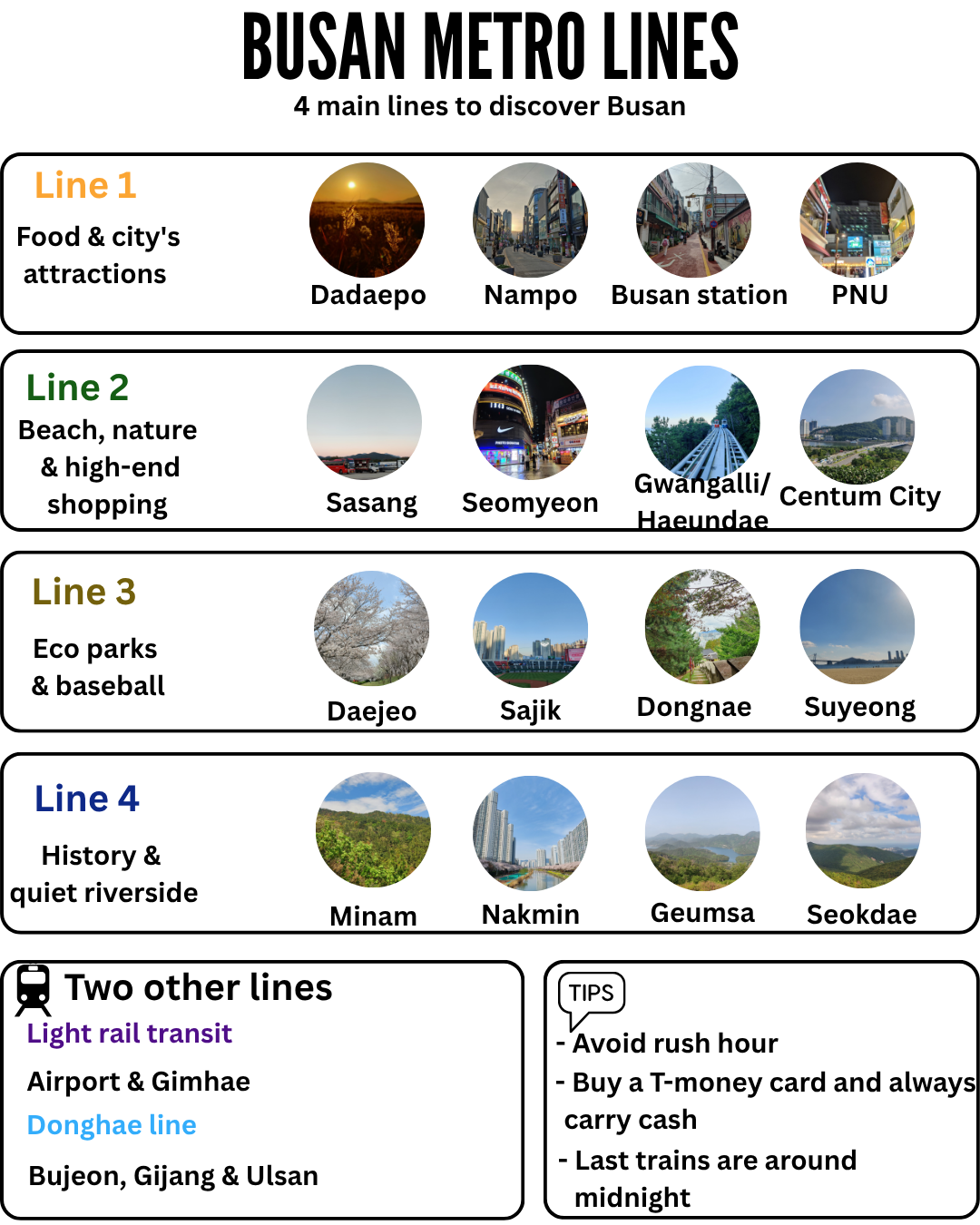
There are actually four main lines, plus two additional “special” lines in Busan.
- Line 1 (orange), think food, city’s attractions and budget shopping: from Dadaepo to Nopo (bus terminal). It runs through Nampo, Busan station, PNU and many other places.
- Line 2 (green), think beach, nature, and high-end shopping: from Yangsan to Jangsan. This line passes through Sasang, Seomyeon, Gwangalli, Haeundae, and Centum City.
- Line 3 (brown), think local markets, eco parks, and baseball: from Daejeo to Suyeong. Less well-known or used by tourists, this line runs through the lively Sajik Stadium and charming local neighborhoods.
- Line 4 (dark blue), think history, peaceful riverside, and residential areas: from Minam to Anpyeong. Chances are you won’t get to this side of Busan if you only have a few days, but this line will allow you to get away from the crowds and discover a more traditional side of the city, combining the charm of the suburbs with that of the countryside.
- Light rail transit (purple), for a day trip to Gimhae: from Sasang to Kaya. If you’re arriving in Busan or plan to depart by plane, this is the line you’ll take. It also takes you to the beautiful city of Gimhae.
- Donghae line (light blue), for exploring the lesser-known parts of the city and taking a trip to Ulsan: from Bujeon to Taehwagang. The line passes through the traditional Bujeon market, the coastal neighborhoods, and Gijang, all the way to Ulsan.
Landmark stations
Getting around Busan is easy thanks to is well-developed network, not to mention that many stations are located right across from attractions or sites worth visiting. Here are a few notable stations.
Line 1
- Dadaepo Beach: beautiful year-round, come for its fiery sunsets, large stretch of sand, peaceful atmosphere, coastal walk, seaside restaurants, and fields of reeds in the fall.
- Nampo: a foodie paradise, but also the ideal neighborhood for some shopping, and views on the harbor.
- Busan station: a lively district, home to the train station and Chinatown.
- Seomyeon: central, with easy access to the two main lines, and great for partying and a bit of shopping.
- PNU: Pusan National University is ideal if you’re looking for cheap eats, shops, and a young, laidback vibe.
- Beomeosa: my favorite temple and a quiet neighborhood.
- Nopo: the end of the line, but also the place where you can catch intercity buses to pretty much anywhere in South Korea.
Line 2
- Hwamyeong: for its beautiful eco park, especially in the spring and fall.
- Sasang: another bus terminal, located near another stunning eco park, Samnak (best visited during cherry blossom season for an even more magical experience), also known for its nearby outdoor attractions.
- Seomyeon: lines 1 and 2 share the same station.
- Gwangan: for the famous Gwangalli beach, its iconic bridge, cute souvenir shops, and the weekend drone show.
- Centum City: if you want to visit the largest shopping mall in Asia and are interested in high-end shopping, this is where you should go. Don’t miss the Spa Land experience (a more sophisticated version of the jjimjilbang in Busan).
- Haeundae: with its high buildings and famous beach, the area is also known for its festivals, the beautiful Blueline Park, and its emblematic sky capsules.
- Jangsan: if you want to get away from it all and go hiking one of the most stunning mountains in Busan, this is your stop.
Line 3
- Daejeo: a tunnel of cherry blossom trees in its eco park and a peaceful neighborhood await you here.
- Minam: a historic fortress nearby (Dongnaeeupseong), ancient tombs and a shrine, not to mention Geumgang park.
- Sajik: if you plan to attend a baseball game (which I highly recommend), this is where you’ll want to get off.
Line 4
- Minam: once again, lines 3 and 4 share the station.
- Dongnae: with its fortress, and long history, this often-overlooked neighborhood is worth the detour.
- Chungnyeolsa: visit the shrine of the same name and admire the pretty scenery in the spring and autumn.
Light rail transit
- Sasang: a bustling district with a bus terminal, supermarket, shops, and delicious restaurants.
- Gimhae International Airport: whether you’re arriving or departing the city, take the subway from this station and save money on taxis.
- Daejeo: lines 3 and this line also share this station.
- Gimhae city and the next 4 stations: because Gimhae is much more than just its airport, be sure to take a day trip to this lovely city with its hiking trail, tranquil park, museum, and much more.
Donghae line
- Bujeon: for its typical traditional market, brimming with cheap yet delicious food.
- Dongnae: for its history (see line 4), but also for the nearby Oncheoncheon Citizens Park.
- Songjeong: the surfing beach, accessible by subway or on foot via the Blueline Park trail.
- Gijang: flying under the radar, this area is the perfect escape from the more crowded neighborhoods; it’s also home to the charming Yongso Well-Being Park.
- Ilgwang: for its family-friendly beach and secluded location.
- Taehwagang: looking to get away from Busan and visit another city? Take the line to Taehwagang and head to Ulsan.
Bus
Getting around Busan by bus is just as easy as taking the subway once you get the hang of it and as long as you don’t get on the wrong side. Plus, the rides are more scenic, since you’re not constantly underground.
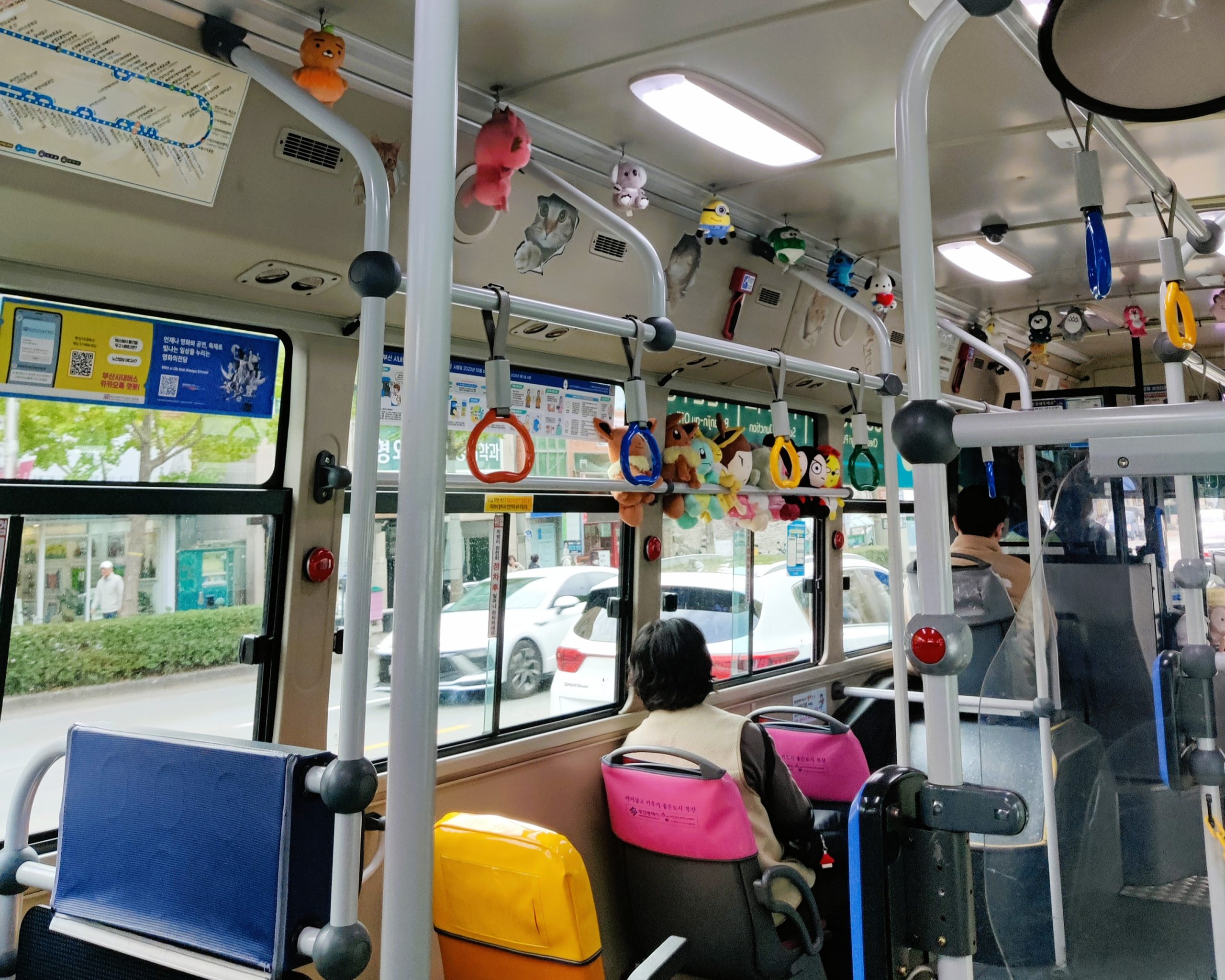
But I have to give you a few words of advice: buse rides aren’t as smooth as subway rides; drivers often seem to be racing or to have no speed limit. Most of them won’t wait for you to get seated either; so it’s best to hold on to whathever you can as soon as you hop on and hope for the best.
Not to mention that the rides can be quite bumpy, since the country is mountainous; if you get motion sickness easily, maybe stick to the subway instead.
Anyway, there are three main kinds of buses that we can distinguish by their color: blue, orange/red, and green.
- Blue: these are the regular city buses, which also run late at night and cover the entire city.
- Orange/red: here we have the express buses, which stops only at certain stations, usually covers long distances, but are also a little bit more expensive.
- Green: remember the bumpy rides? Well, you’ll experience them even more if you take this village bus, which you’ll find in residential and more secluded neighborhoods. Its specialty: weaving through winding, narrow, and steep alleys.
Shuttle bus
There’s also a shuttle bus service in Busan connecting Busan Station or Nampo-dong to the Busan Port International Passenger Terminal.
Departures take place between approximately 7 a.m. and 7 p.m.
Additional shuttle services are also provided during special events, such as major concerts or festivals.
Airport Limousine
If you’d rather not navigate the subway or bus system right after landing, you can always take the Limousine bus, which will take you directly to Seomyeon, Bujeon, Haeundae or even Gijang. This is the ideal option for travelers who have booked accommodations in these neighborhoods.
The trip takes about an hour and costs between 6,000 and 9,500 KRW.
For the exact route and schedule, check out the airport’s official website here.
Intercity buses
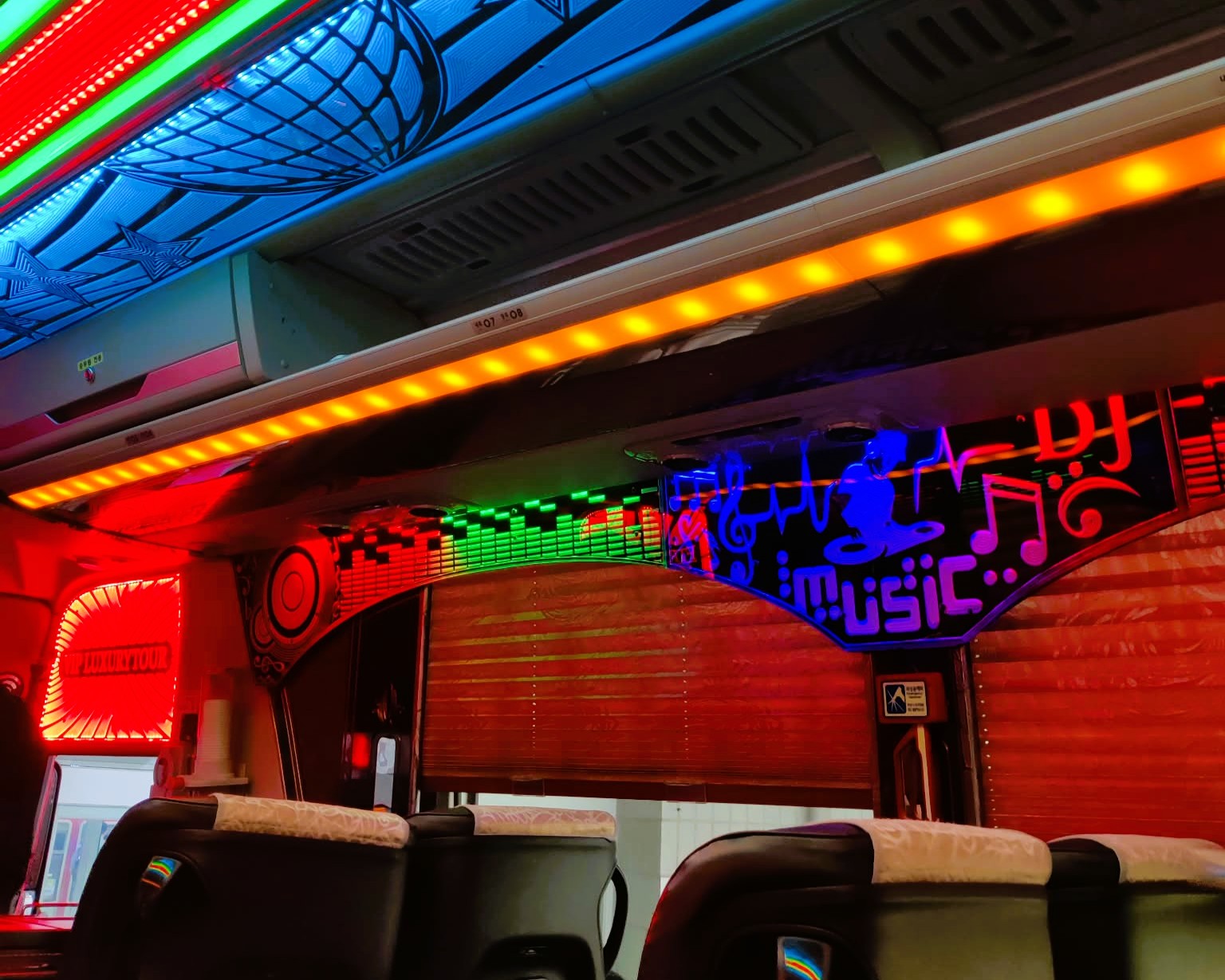
It’s not really for getting around Busan itself, but if you’re planning a day trip or want to visit other cities and regions by bus, you can do so by going to the two main terminals: Nopo and Sasang.
Traveling by intercity bus definitely takes longer than by train, but it’s also cheaper and ideal if you’re not in a hurry and want to enjoy a scenic journey.
Subway and bus hours
Subway lines usually operate from 05:00 AM to midnight, with subways arriving every 3 to 10 minutes depending on the time of the day.
Bus lines, on the other hand, generally rune from 04:30/05:00 AM to 22:30/23:00 PM, with buses arriving every 10 to 20 minutes depending on the line and time of day.
Trains
Busan has both regional trains, which serves the small towns around the city, and KTX or high-speed trains connecting major cities in South Korea.
Note that while regional trains are rather cheap and easy to book (even on the same day), KTX trains are often fully booked (even more so during holidays); so it’s best to book a few days in advance to ensure you have a seat.
While there used to be a website for foreigners to book train tickets, these days it no longer works consistently; so you can use Klook instead or wait until you’re in the country to buy your ticket.
Bikes/E-Scooters
Public electric bike-sharing system operates in Busan, but you’ll need to download the Kakao T Bike app and be at least 16 years old to use it. Although, I must admit that they’re harder to find than e-scooters.
You can also visit bike rental shops, which are often available along the riverside or at Oncheoncheon Citizens Park for free, for example.
For e-scooters, you’ll also need to download an app (SWING or Beam), bet at least 16 years old, hold a driver’s license, and wear a helmet (or face a fine). However, I’ve seen many young people using them, so I guess there’s a way around it, but it’s still better to follow the law.
Taxis
If you know me, you know I hate taking taxis: you’re more likely to get scammed, and the fare can be pretty high, even for short distances, which doesn’t really suit me as a budget-conscious traveler.
But in South Korea, taxis are relatively cheap and fairly easy to catch, thanks to apps such as Kakao T. They’re also the best option if you’re carrying bulky luggage and don’t want to drag it through the endless subway tunnels.
Not to mention that bulky suitcases aren’t allowed on buses either.
Renting a car
Personally, I traveled around the country only by public transit and intercity buses without a hitch (but keep in mind that you sometimes need to be a little more patient), but you can definitely opt to rent a car for more freedom.
Although I think buses and the subway are sufficient for getting around Busan, renting a car to travel to remote areas or Jeju Island might be the right choice.
Prices vary depending on the car model and rental agency, but if I had to suggest two options based on my friend’s recommendations, it would be the well-known Lotte rent-a-car, and, for more affordable options, Klook.
Don’t forget to check out the local laws, traffic regulations, and your international driver’s license.
T-money
Getting around Busan without this little item isn’t impossible, but having it make your life much easier.
The T-money or transportation card in South Korea lets you use all of the country’s public transportation systems without having to buy single tickets every time.
You can pick one up at any convenience store, as well as shops like Artbox (for cuter designs).
You can also link it to your phone and use it as a payment method at convenience stores, cinemas, and more…
If you get a physical T-money card, remember that you’ll need cash to recharge it at machines in subway stations or at a nearby convenience store.
Practical Tips & Etiquette
As always, here are a few tips for using public transporation smoothly and respectfully in South Korea.
- Tap-in & tap-out: whether you’re taking the bus or the subway, you’ll first need to tap-in your transit card upon entry, then validate it again upon exit. On the subway, this isn’t an issue since you won’t be able to exit if you don’t do so, but on buses, if you forget, you’ll lose some of the credit on your card.
* You always board at the front of the bus and exit at the back.
- Keep quiet: you can, of course, chat with your friend, but be sure not to speak too loudly and to wear headphones if you intend to listen to music or watch videos.
- Respect the reserved seats: generally pink for pregnant women, and yellow for elderly, people with disabilities…
- Transfers are free: up to 30 minutes after getting off the bus and boarding your next bus or subway.
- Avoid rush hour: especially between 7 a.m. and 9 a.m. and between 6 p.m. and 8 p.m.
FAQ
Is it easy to find parking spots in Busan?
Since it’s a big city, I wouldn’t say it’s easy, but it’s doable. First of all, avoid areas around tourist attractions, especially on weekends.
Otherwise, you can find parking spots near major subway stations, traditional markets, and, of course, national parks.
Keep in mind that many parking lots may require a Korean credit card to pay; that’s why it might be easier to get around Busan using public transportation.
Are taxis safe in South Korea?
Yes, they’re pretty safe! The biggest danger in a taxi is the driver, since Koreans often seem to love driving a bit recklessly (sudden acceleration, for example).
Is public transportation accessible to people in wheelchairs?
Yes, many subway stations are equipped with elevators, with a minimal gap between platform and the train, and there are also low-floor buses.
Are there any restrictions on luggage on buses or the subway?
I haven’t noticed any restrictions on luggage on the subway, but buses don’t allow passengers with large suitcases (often larger than carry-on luggage) or large backpacks (over 40L).
And if you intend to take the bus during rush hour, you may be denied boarding, regardless of the weight or size of your luggage.
If you’re carrying large luggage and don’t want to take the subway, your best option is to book a taxi.
And that’s a wrap on getting around Busan and its public transportation. I hope this guide helps you get a sense of what to expect and puts any concerns you might have had to rest.
👉 As with any trip, don’t leave without travel insurance: here’s the link to the travel insurance I personally choose for each of my trips, Heymondo (with a 5% discount, just for you)!
Where to stay in Busan
Unsure where to drop off your luggage? Check out: The Best Neighborhoods To Stay In Busan – A Complete Guide!