4-Day Itinerary In Okinawa – How To Explore The Island Even In Winter
Who doesn’t love an island vacation, surrounded by clear blue waters, sand between your toes, and a relaxing atmosphere? And because Japan is actually an archipelago made up of thousands of islands in addition to its four main ones (Hokkaido, Honshu, Shikoku, and Kyushu), it would be a shame not to get away from the major cities to explore an island.
On that note, let’s dive into the beautiful Okinawa and see why it’s the perfect escape, even in winter.
Note: this itinerary was planned using only public transportation.
This post contains affiliate links. Whenever you buy something through one of these, I get a small commission, without any extra cost to you. Thank you!
🗾 For more posts about Japan:
– 3-Week Itinerary In Japan – Exploring Kyushu And Okinawa
– Japan Itinerary: 12-Day Discovery For First-Time Visitors
– 3 Days In Fukuoka: One Of Japan’s Most Underrated Largest Cities
Save it for later!
Okinawa: Essential Information
Best time to visit Okinawa
Aside from typhoon season (May to October), I wouldn’t say there’s a bad time to visit Okinawa. It really depends on your interests and whether or not you want to do a lot of water sports.
So let me give you a quick overview of what you can expect in each season in Okinawa.
Spring (March-May): it’s the beach season, and also the time when you can enjoy boat races or Hari festivals.
Summer (June-September): monsoon and typhoon season, but it’s also the season for festivals, fireworks, and spotting turtles and manta rays.
💡 Note: this is also the peak season and the heat can be scorching.
Autumn (October-November): fewer risks of typhoons, but the temperatures remain ideal for water sports enthusiasts.
Winter (December-February): while some cities welcome snow in Japan, Okinawa is the first to see cherry blossoms bloom (mid January-mid-February). You get the laidback vibes, with less people, and you can still enjoy diving (with a wetsuit), whale watching, and December events.
Visa
You probably won’t need a visa thanks to the visa waiver agreements Japan has with 74 countries. You can also enter the country for up to 90 days, depending on your nationality.
And for smoother procedures, such as immigration and customs, where you can avoid filling out paper forms, don’t forget to create an account on Visit Japan Web.
Language
Japanese is the official language of the country. English is not widely spoken, but you can get by with basic English and the use of a translator app such as Google Translate. Don’t forget to learn a few local words, which is always appreciated by the locals.
Money
The official currency of Japan is the Japanese yen (¥/JPY).
Phone
Don’t forget to buy a SIM/eSIM card!
If you choose a SIM card, opt for Sakura Mobile: reliable and fast internet, and reasonable prices.
You can also use Airalo or Holafly, or buy your physical SIM card directly at the airport if your phone isn’t compatible with eSIM or if you simply prefer a physical option!
Note: you won’t necessarily get a local number in Japan.
Getting around Okinawa
Unlike in many cities in Japan, your IC card won’t work automatically in Okinawa. If you have a SUICA card, it’ll work, but not everywhere, since Okinawa has its own version of a prepaid transit card: OKICA.
But don’t worry, navigating public transportation in Okinawa is pretty much the same as elsewhere in Japan.
You can pay in cash (per the distance), and sometimes by credit card (contactless) on the red buses or shuttles that usually connect major attractions around the island.
There’s also the Yui Rail aka Okinawa’s monorail, which serves 19 stations, including Naha Airport, and on which you can pay with a SUICA, OKICA, or by purchasing a ticket.
How to spend 4 days in Okinawa using only the bus
If you want to have four full days on the island, you can do as I did and take an evening flight to Okinawa so as to have dinner and start your exploring in the morning the next day.
Day 1: Shrine, temple & history
While Okinawa has some beautiful famous sights, there’s also a few places a little under the radar that deserve your attention, especially if you want to avoid potential crowds.
Naminoue Shrine & Fukushūen Garden
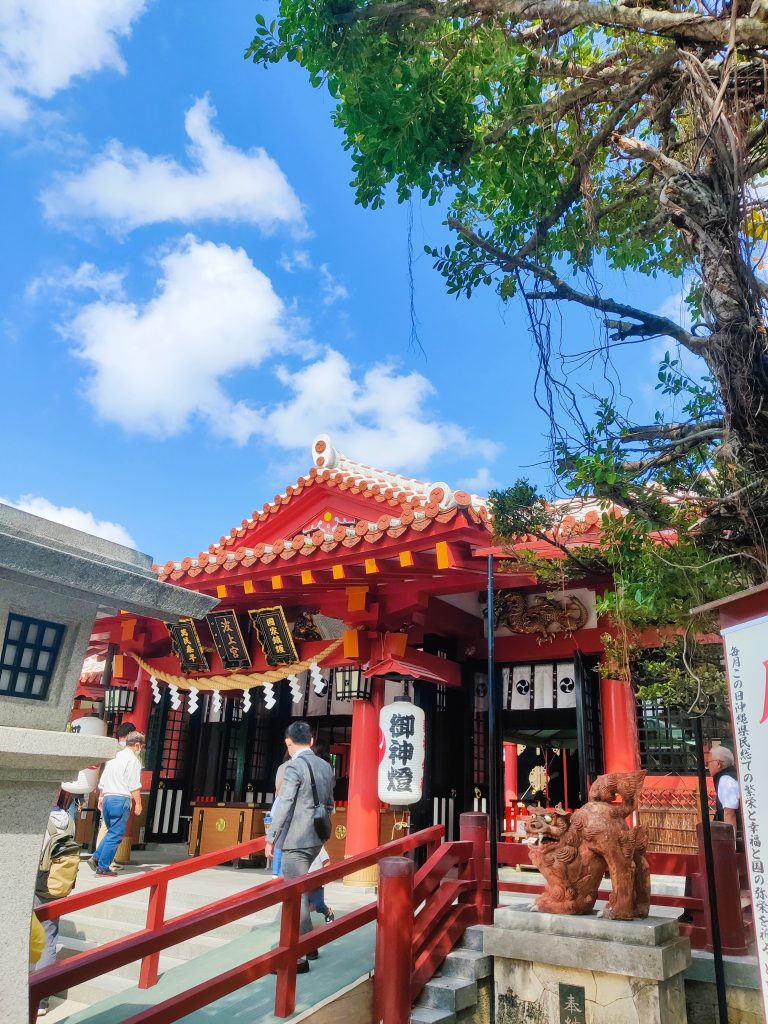
After breakfast, direction Naminoue Shrine, which is particularly well-known for its location perched atop a cliff and for the contrast between its position, half-hidden among the greenery, and the vibrant turquoise waters of the beach below.
Although the shrine isn’t very large, it’s still recognized as one of the most famous on the island, making it quite a touristy spot, but I’d say is still worth a visit.
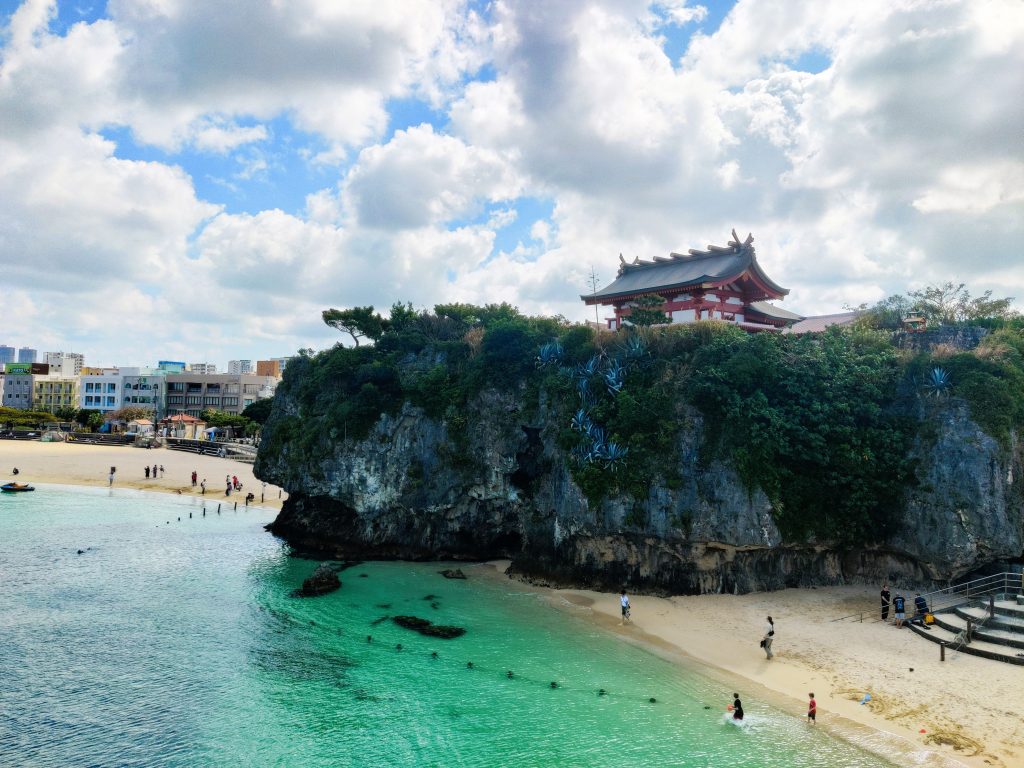
On the other hand, I wouldn’t particularly choose to lie down or spend much time on Naminoue Beach below, as it’s far from the prettiest beach I’ve seen in Okinawa, probably because of its unusual location beneath the highway. But for a quick stop, why not?
✨ Tip: if you want a good photo of Naminoue Shrine on its cliff, head to the highway bridge.
Since this itinerary is centered on getting around on foot and by public transportation, here’s another spot worth mentioning that’s just a 5-minute walk from the beach: Fukushūen Garden.
For ¥200 ($1) admission, you’ll feel transported to China thanks to its pavilion by the water, serene waterfall, beautifully landscaped gardens, and quiet atmosphere, perfect for a stroll away from it all. There’s even a central koi pond in the garden!
Shuri Kinjo Town Stone-paved road
While many people say it’s not a must-see, I particularly liked this old cobblestone street for its history and its many hidden treasures.
This 500-year old road, which used to be an important connection between the port of Naha and Shuri Castle has managed to preserved some of its ancient symbols such as its stone walls, red-tiled houses, and its large akagi trees.
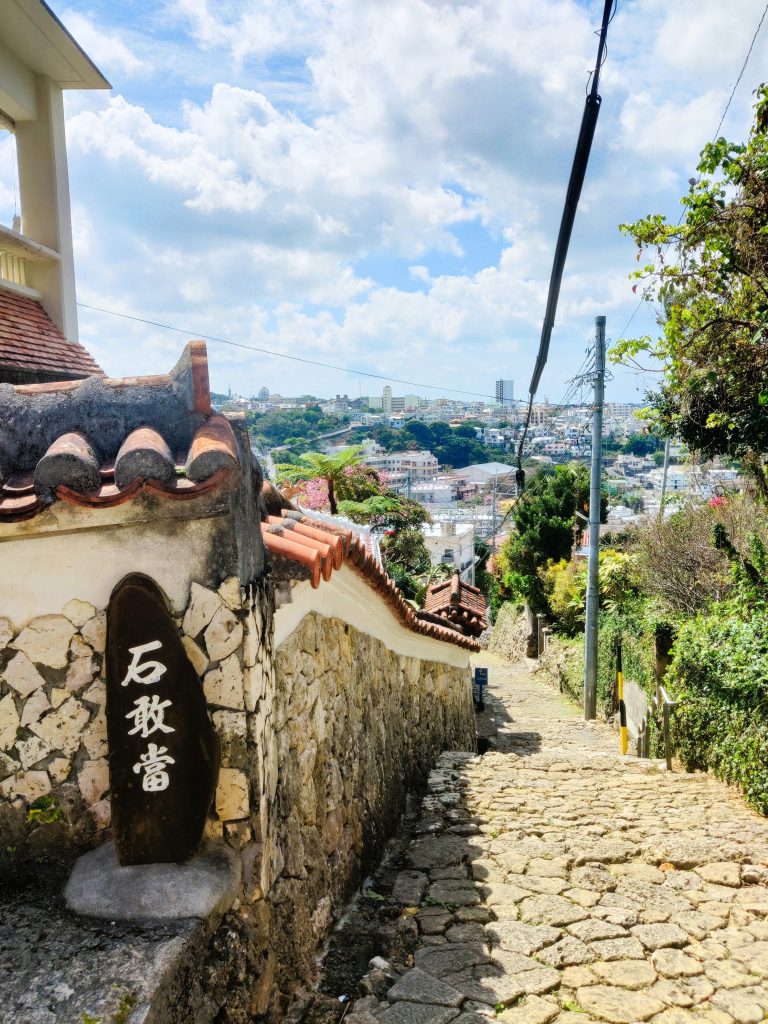
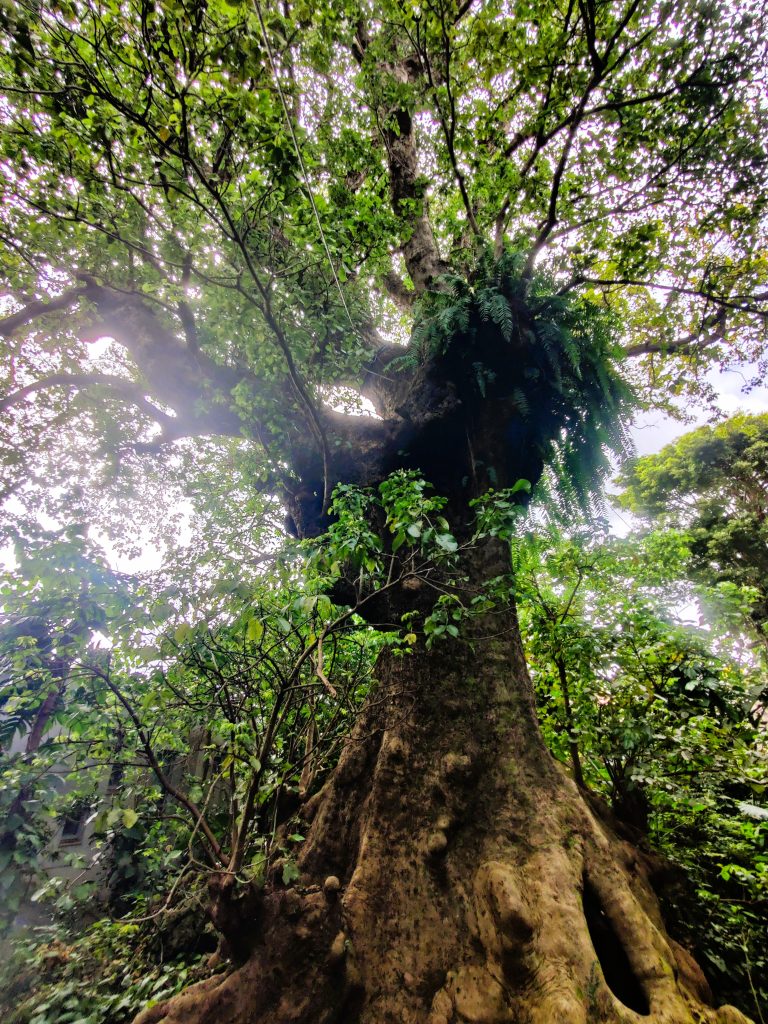
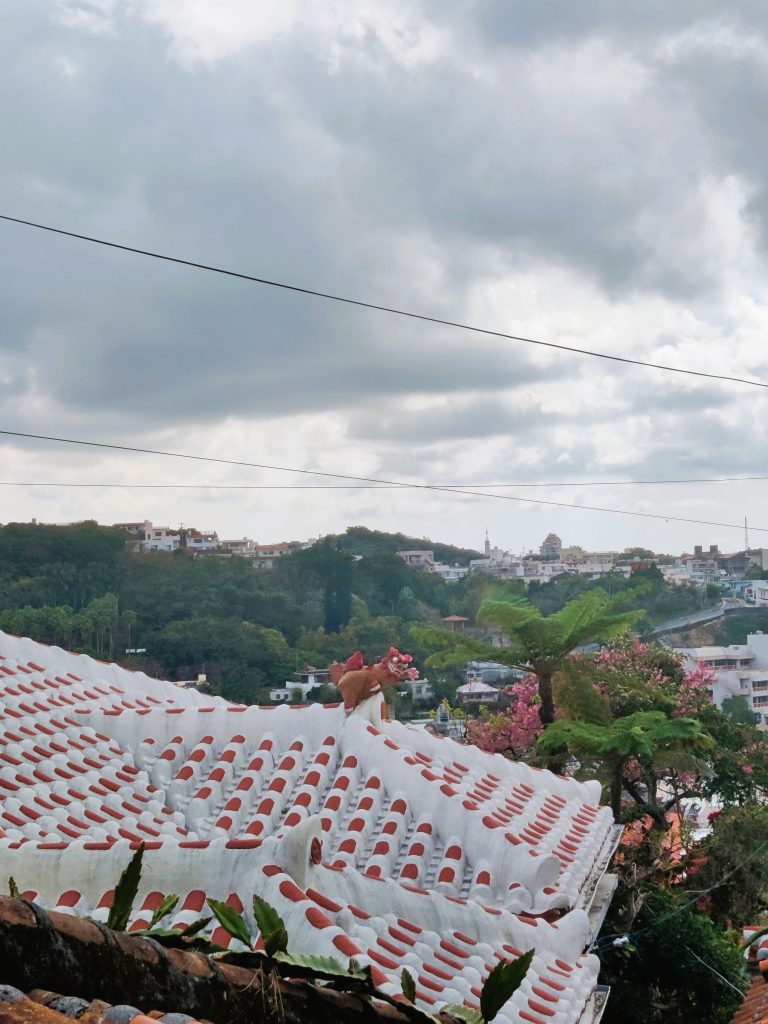
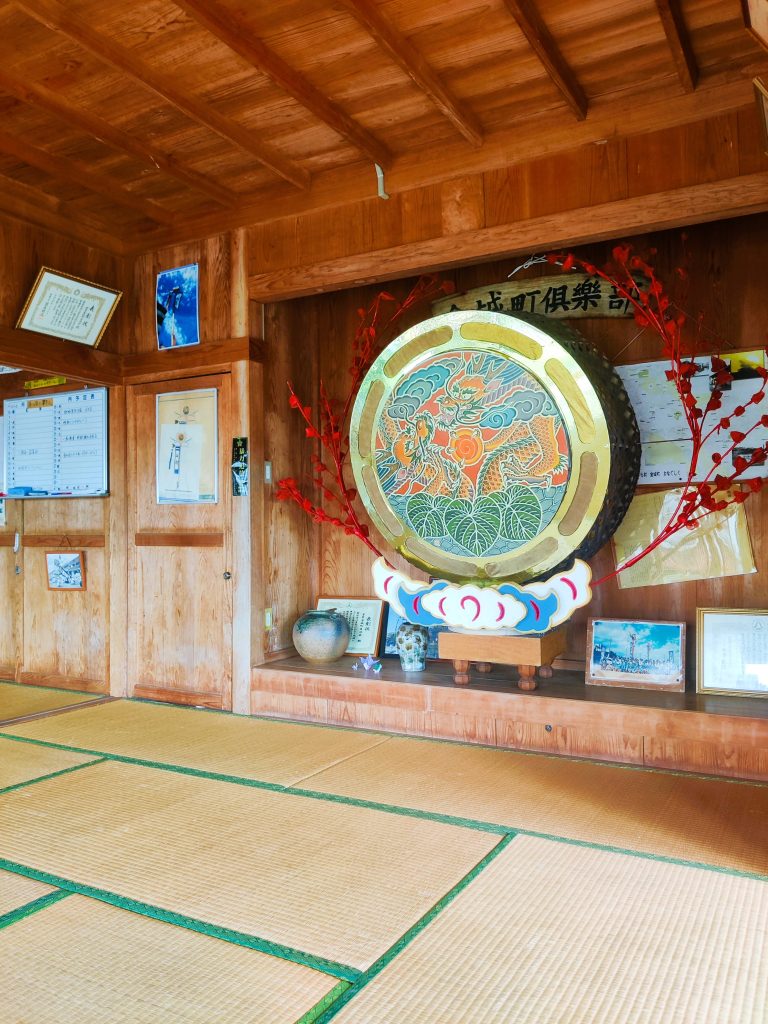
Even if it might not seem like the most exciting activity for some on a visit to Okinawa, walking along a piece of history is kind of amazing when you think about it. Not to mention, that there are plenty of treasures around: a traditional Okinawan house where you can take a break, an ancient filming location from the drama “Churasan”, a place of worship hidden in the middle of a small forest…
So if you’re interested in a part of the history of the Ryukyu Kingdom, give this road a chance.
✨ Tip: the stones can be quite slippery, so avoid wearing high heels or flip flops.
🚟 How to get there: from Naminoue beach, it’s about an hour’s walk, or you can take the Yui rail from the Prefectural Office station (8 stops), get off at Shuri station, and then walk for 20 minutes.
Sairaiin Temple and Shikina-en Royal Gardens
Back on the road for a 20-minute walk to Sairaiin Temple, also known as Daruma Temple. Hidden in an alley, this temple whose daruma dolls are a famous symbol in Japan is a picturesque and charming place to spend some time in Okinawa.
If you’re not familiar with daruma dolls, they represent perseverance, and are usually made from papier mâché. You can learn more about where they come from at the small “museum” located on the first floor of the temple.
As I walked around the temple, I saw many dolls, whose eyes hadn’t been painted yet. So let me share what I’ve learned as there’s a whole story behind them and their symbolism. Daruma’s eyes are in fact usually blank, you fill in one eye when making a wish or setting a goal, and the other when that wish/goal has been achieved. Hence, the dolls with unfinished eyes.
The particularities of this temple: its size, very small but very cute, its red torii gates, and its location in an alley, insconspicous if you don’t know where to look.
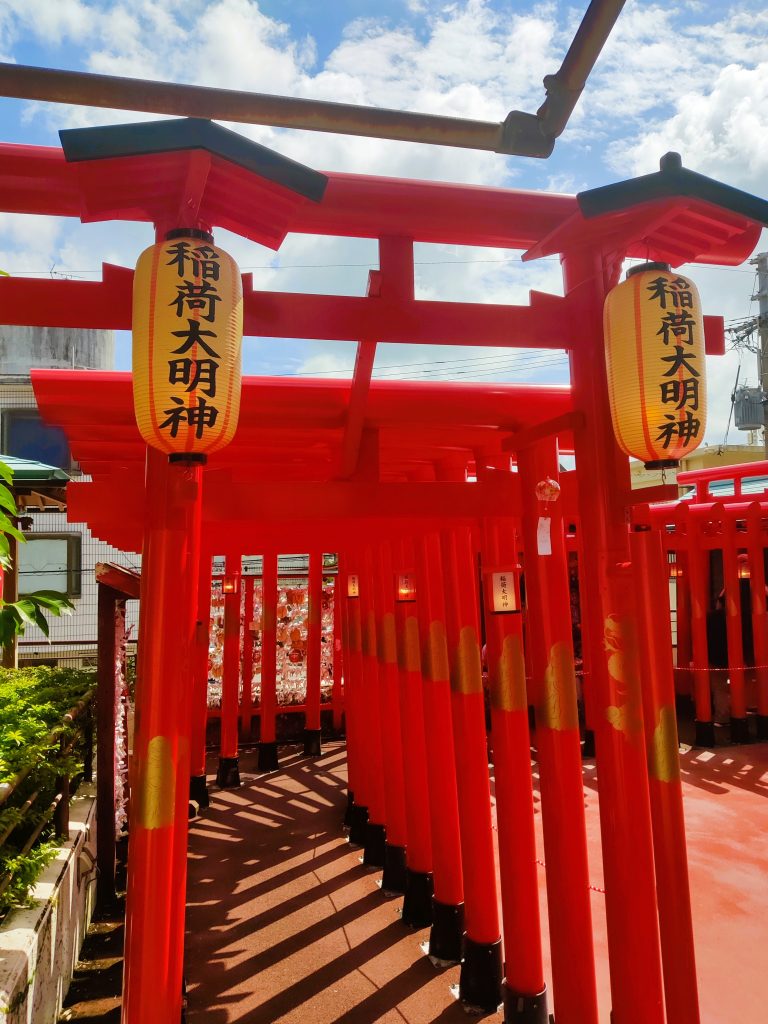
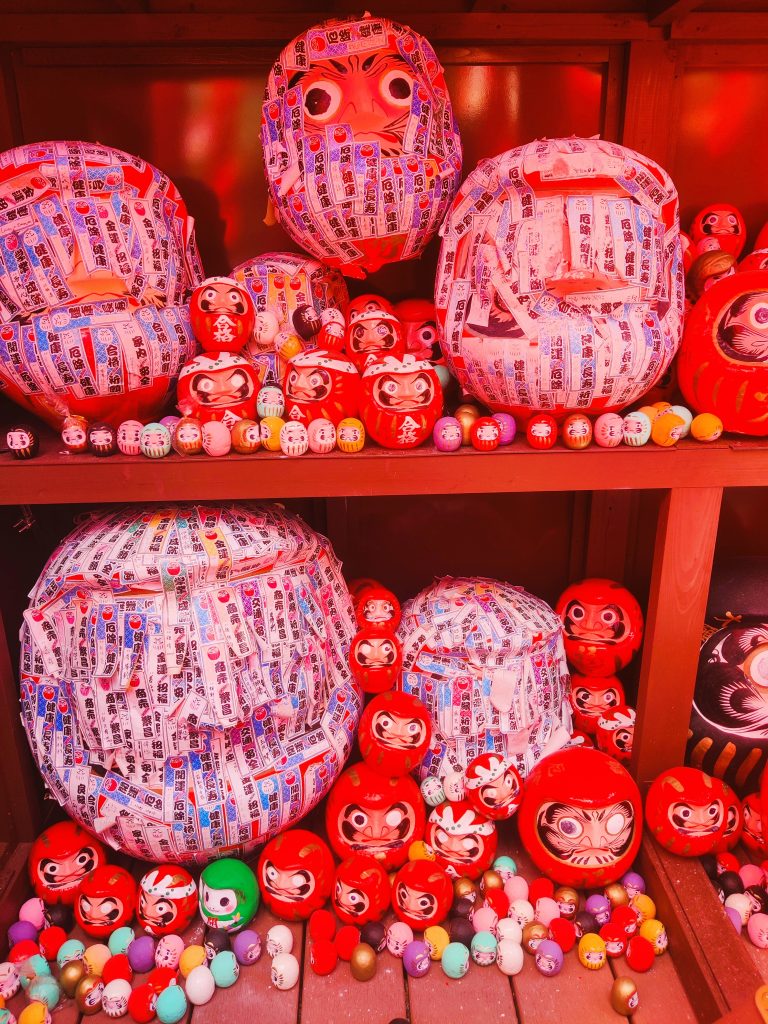
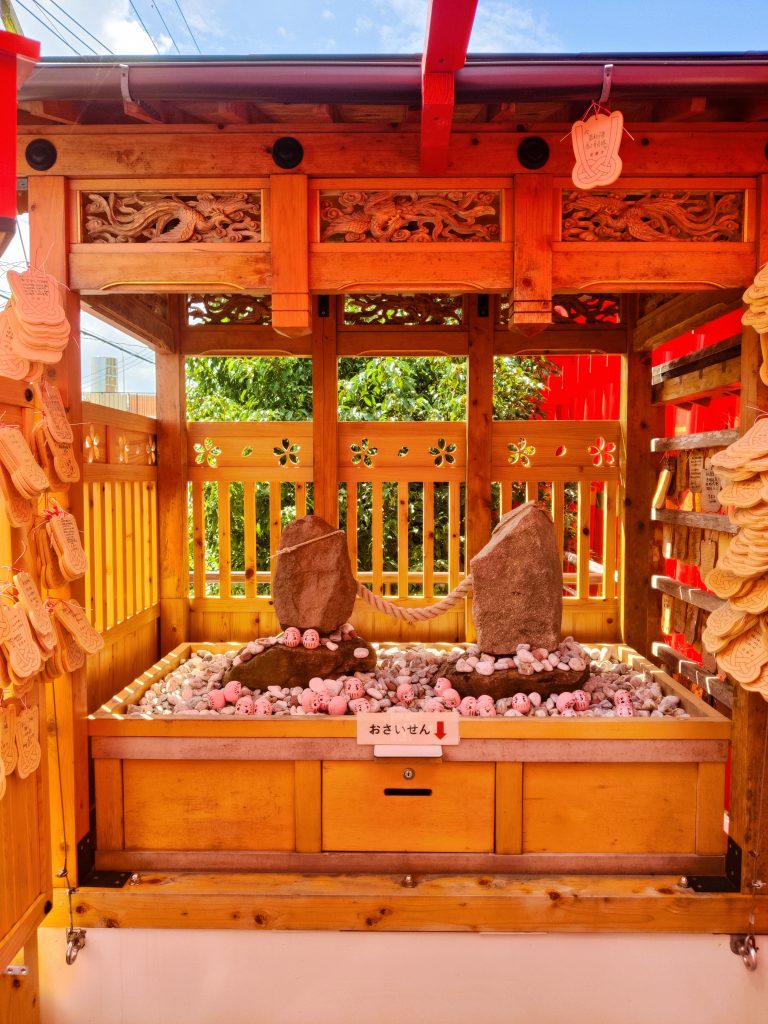
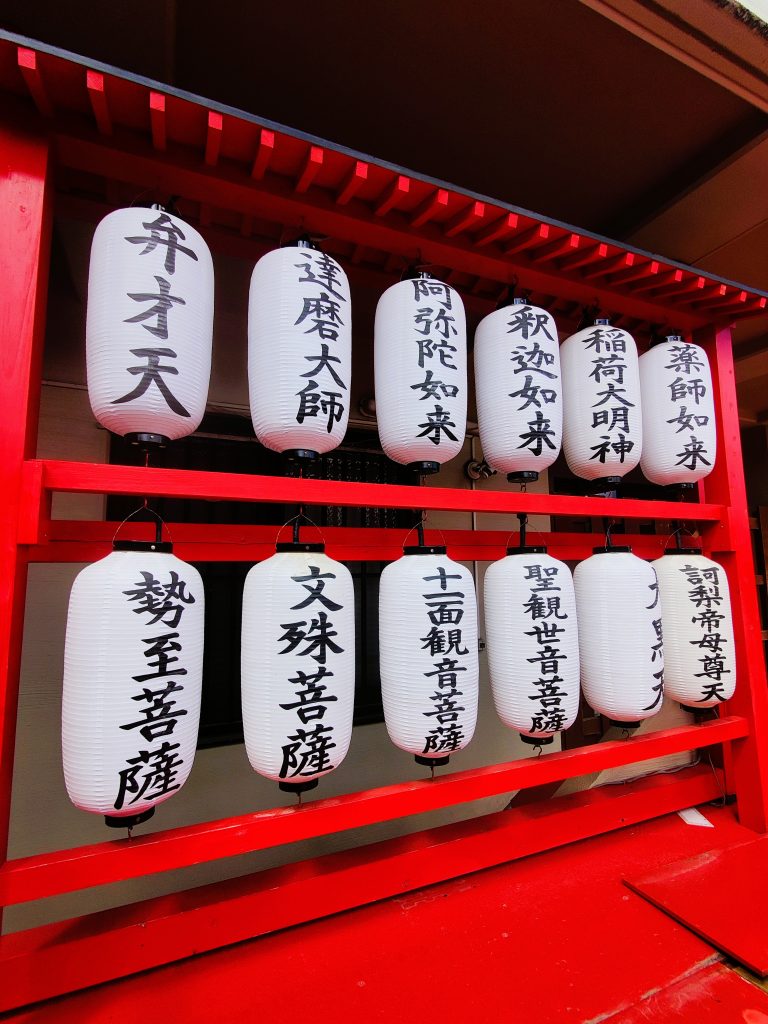
And to conclude this first day on a high note, I recommend visiting Shikina-en Royal Gardens. Another affordable activity, where admission will cost you ¥400 ($2) for a tour of what once served as a villa and a place to entertain foreign envoys during the Ryukyu Kingdom era.
Arched bridges, a pond, lush trees, and flowers make these royal gardens the perfect place to enjoy a relaxing stroll amid natural beauty.
Day 2: Direction Bise
Okinawa is breathtaking but if there’s one place I would visit again and again should I ever come back to the island, it would definitely be Bise and its many attractions.
Kokuei Okinawakinenkoen
Or Emerald Beach, a place that lives up to its name thanks to its clear and pleasant waters and all the activities it offers in the vicinity. Because yes, the beach is, in fact, part of a larger park that includes a botanical garden, an aquarium, a museum, and various shops.
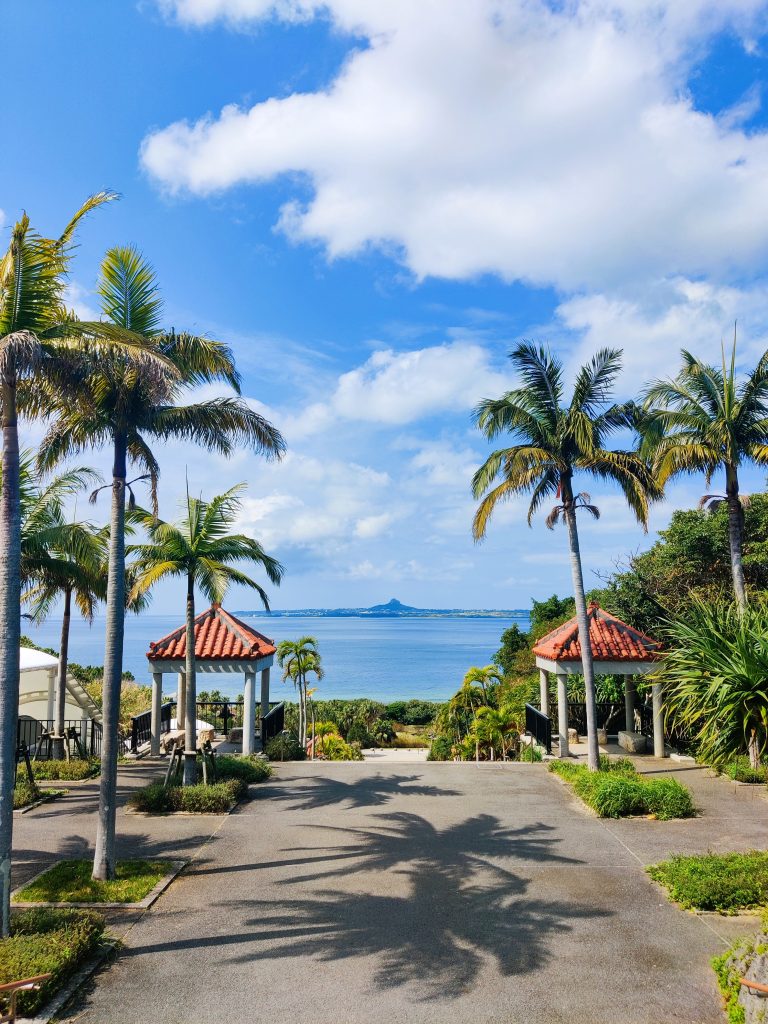
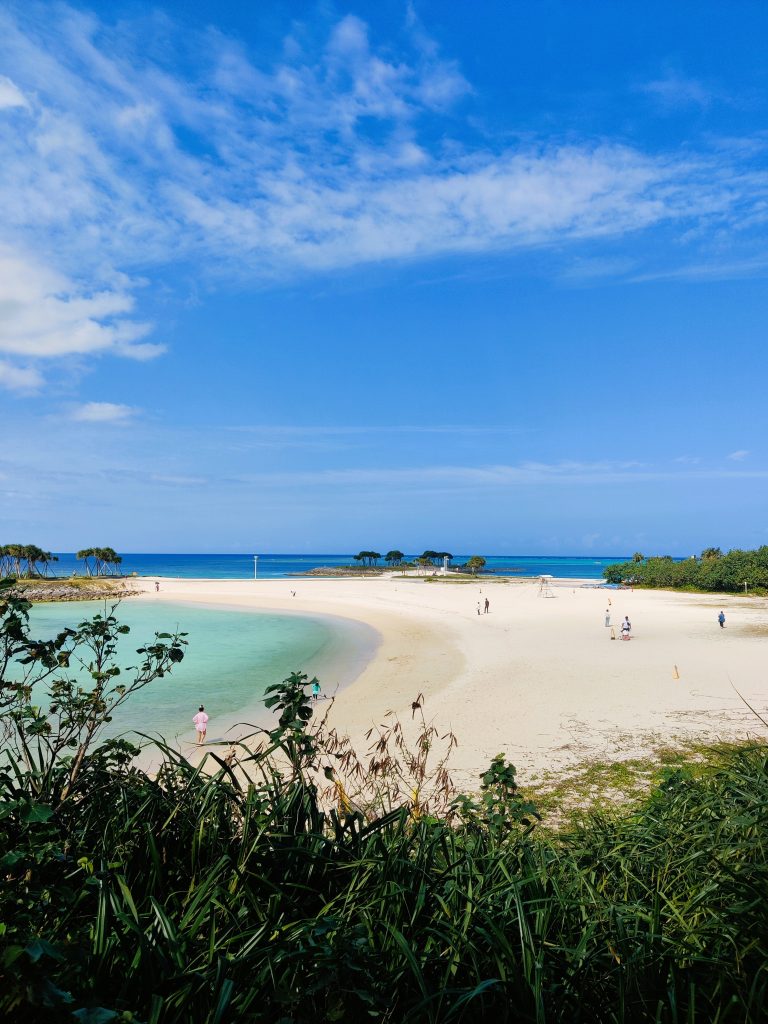
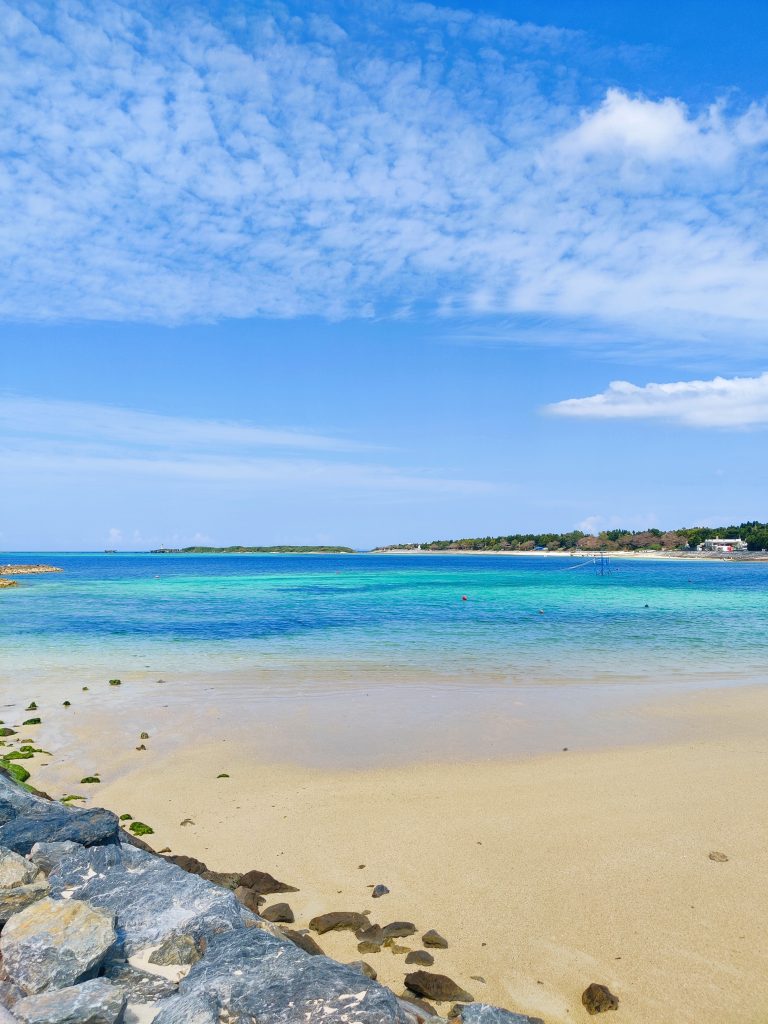
And while I wouldn’t stop at the aquarium, the other sites guarantee a day of fun and excitement for all ages.
Oh, and if you’re there in the summer, don’t miss the Ocean Expo Park Summer Festival, the largest fireworks’ show happening in Okinawa, which usually takes place in July.
But honestly, even just spending the day swimming here feels like a dream thanks to its coral sand and glistening blue waters. Plus, apparently, sea turtles even come to lay their eggs directly on the beach.
✨ Tip: swimming is allowed from April to October.
🚟 How to get there: take bus YKB888 from Naha city, but plan you day carefully to avoid rush hour and weekends if possible.
Bise Beach & Bisezaki Coast
Still want to explore the Bise area? Then walk along the coast to Bise beach where you can see a variety of tropical fish and corals.
But don’t step on the coral, and watch out for strong currents in this area.
And for another spot in Bise, opt for Bisezaki Coast, another excellent spot to observe colorful fish, whether you’re snorkeling or not, thanks to its clear waters, which are shallow in certain areas.
From there, you can also reach the small nearby island, but only at low tide and only if you’re wearing water shoes to avoid injuring your feet on the rocky seabed.
Bizesaki Coast is also a nice spot to watch the sunset!
Day 3: Yomitan
Okinawa has no shortage of beautiful beaches, and Yomitan, of course, has its share of beautiful white-sand coastlines and water activities.
If I had to name just a few, here are three beaches you won’t want to miss in Yomitan:
- Senaha Beach: hidden cave, marine life, and secluded beach kind of vibe, ideal for solo explorers.
- Nirai Beach: a quiet beach off season, with crystal clear waters and magnificent sunsets. Located next to a hotel resort, where sunbeds are available during the season.
- Toguchi Beach: ideal for picturesque coastal walks, this beach offers soft white sand and a relaxing atmosphere, as well as stunning sunsets.
But I didn’t mention Yomitan just for its beaches, because no matter the time of year, Okinawa is also a great place for diving, even in winter. Sure, the water temperature will be a bit cooler (low 20°C), but diving in winter also means less people, clearer waters, and humpback whale season.
There are a few dive centers in Yomitan that cater to English speakers, of which these two solid addresses were recommended to me:
- English Empire Divers
- Sunkissed Divers
And if you’re not into diving, Yomitan is also known for a special craft, pottery, which you will find in Yomitan Village (Yachimun no Sato). Browse the different shops, wander, or buy your next keepsake.
Day 4: Day trip to Tokashiki Island
While a day trip is often enough to visit the smaller islands, that’s probably not the case for Tokashiki Island. But if you want to explore beyond Okinawa, even if just for a day, then it’s a viable and cool option.
Located between 40 minutes and an hour by ferry, it’s the perfect place to unwind on a paradise island.
Whether you explore on your own or on a tour, there’s one thing you should know if you’re planning the trip yourself: buses aren’t frequent so you better leave early in the morning and check the ferry schedule in advance to allow enough time in case of any unexpected delays.
In any case, I would advise taking it slow and visiting only one beach if you don’t intend on doing any water sports.
- Choose Aharen Beach for its natural beauty, and its stunning viewpoint offering breathtaking views of the beach from above.
- Choose Tokashiku Beach for the chance to see turtles and for its quiet atmosphere.
Since Tokashiki is the largest of the idyllic Kerama Islands, there’s a good chance you’ll be eager to try one of these activities:
- Kayaking: go at your own pace and observe marine life as you glide across the water.
- Snorkeling: explore the waters and their colorful underwater life, discovering species you’ve never seen before.
- Diving: immerse yourself into the “Kerama blue” waters and uncover their many wonders.
- Jet skiing: feel the adrenaline rush as you ride across the crystal-clear waters.
And don’t worry, for those who want a warm winter escape, here are two additional, special activities for this season:
- Hiking: there are a few hiking trails on the island, such as the Mt. Teruyama Observation deck, Kubandaki Lookout, or Aran Observation deck.
- Whale watching (from January to March).
👉 If you’d rather join a tour, Klook offers a great tour with lunch: book here.
🐳 And for the whale watching experience: book here.
🚢 How to get there: for ferry schedules and reservations, check the official website.
Kokusai-dori Street
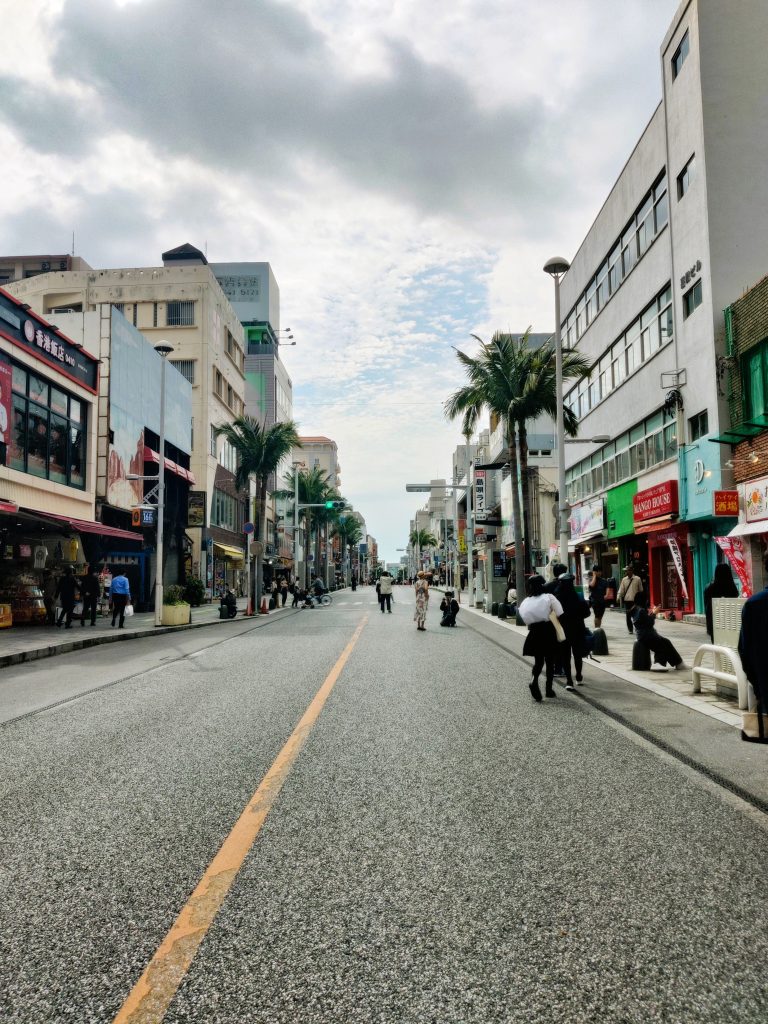
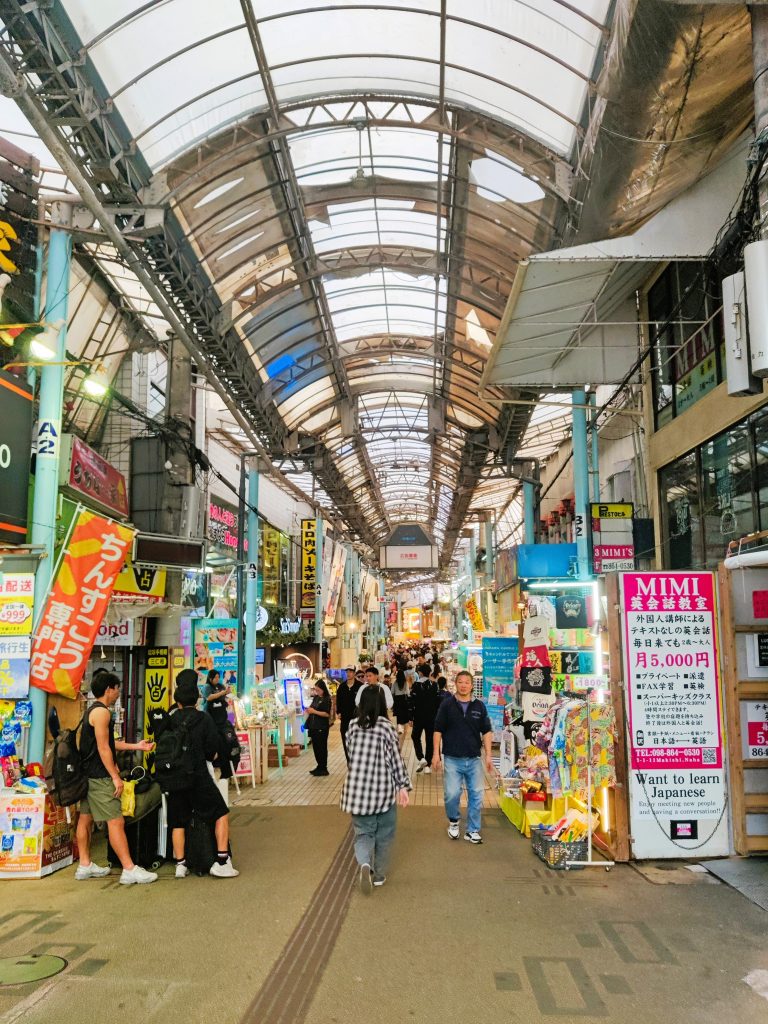
How to wrap up four days in Okinawa? With a little shopping, of course! And what better place than the lively Kokusai-dori street, where you’ll find a plethora of souvenirs, but also skincare products and snacks to try.
And if you’re more a pottery and ceramics enthusiast head to Tsuboya Yachimun Street to find a more unique souvenir.
Accommodation options in Okinawa
Budget-friendly, clean, and comfortable, here are a few options you should consider for your trip to Okinawa:
- HOTEL minimumms.: Women-only, clean, and just a few minutes from the shopping street. This hotel offers both cozy dorm and private rooms, including a free breakfast.
- KIYAZA RESORT 沖縄 KUME: Private rooms with everything you need, including a washing machine and dryer. Located near restaurants, Naminoue Shrine, and konbinis.
- CONDOMINIUM HOTEL Riyuka in KUME: A simple private room with a bathtub, shower, as well as a balcony. A well-equiped room with a free washing machine as a bonus.
Restaurant options in Okinawa
Whether you’re looking for traditional Okinawan cuisine or simple yet delicious food, here are a few addresses that are sure to delight your taste buds.
- Mikasa Matsuyama: No-frills dining, this restaurant serves homestyle Okinawan cuisine at a very affordable price in a family-friendly atmosphere.
- Yunangi: A famous address (as evidenced by the long waiting line) for its goya champuru and the variety of local dishes available. Everything will make you drool, but be sure to bring cash and a translator, as English isn’t really an option.
- 海喜食堂 (Miki Shokudo): If you’re craving seafood at an affordable price, this is the place to go. Plus, the staff is kind and cheerful!
- 円山 (in Nago): Ever tried eel? If not, you can try their eel rice set here!
- Hachiren: Because a trip to Japan is never complete without tasting ramen, I won’t make an exception in Okinawa either.
Okinawa Budget Recap
Traveling to Okinawa on a budget is more than doable so here’s an overview of the expenses you can expect.
✈️ Flight (Fukuoka to Okinawa): $45
🏨 Hotels (per night): $30 – $50 → Book available hotels
🚌 Transport: $50 → Buses & Yui Rail
🍜 Food (per meal): $5 – $15
🎭 Activities: $35 – $100 → Check activities
📱 SIM/eSIM: $15 – $40 → Get a SIM/eSIM card
✈️ Travel insurance: $50 – $100 → Get travel insurance (5% off with my discount code)
Helpful Apps
To make your trip to Okinawa easier, here are a few apps you should consider downloading!
Navigation: Google Maps
Interactive routes and detailed information on public transportation: NAVITIME
Language app: Google Translate
Taxi: GO taxi
Find the best restaurants: Tabelog
Refill your water bottle for free: mymizu
Luggage storage: ecbo cloak
Shopping made easier: Payke
Earthquake early warnings: Yurekuru Call
FAQ
Is 4 days in Okinawa enough?
Far from it. There’s so much to see and do in Okinawa that I don’t think even a month would be enough. But four days is already a great way to get a sense of what the island has to offer and soak up its relaxed vibes.
What’s the Okinawa Blue Zone?
Okinawa is one of the five regions designated as the “Blue Zone”: regions that have a highest life expectancy. This may be dut to a healthy diet, a purposeful and less stressful life, and other factors that promote quality of life.
Is Okinawa safe for solo female travelers?
Yes, it’s completely safe. Even walking alone at night, I’ve never felt uncomfortable.
Is English widely spoken in Okinawa?
In the most touristy areas or in hotels, you’ll more easily find English-speaking staff, but otherwise, it’s best to learn a few local words and use a translation app.
Can this itinerary be done in winter?
Of course! Temperatures may be in the low 20°C, and while you may not be able to swim at the beach, you can still go diving (with a wetsuit) and enjoy the beauty of the beach by soaking your feet in the water and lounging on the sand. It’s also the ideal destination if you want to escape the freezing temperatures on the mainland.
Ready to hit the beach or see turtles and whales in Okinawa? Save this itinerary: whether you intend to visit in summer or winter, Okinawa is sure to charm you with its turquoise waters and delicious cuisine.
Want to escape winter?
Check out these 12 Best Cheap Destinations To Escape The Harsh Winter